するだろう
解説 Definition
would は、〜するだろう、〜するつもりだという意味を表す助動詞です。想像上のこと、ていねいな言い方、過去から見た未来などで使われます。
Would is a modal auxiliary used for imagined or conditional results, polite wishes and requests, repeated past behavior, and future events viewed from a past time. It is followed by the base form of a verb.
覚え方のコツ Memory Tip
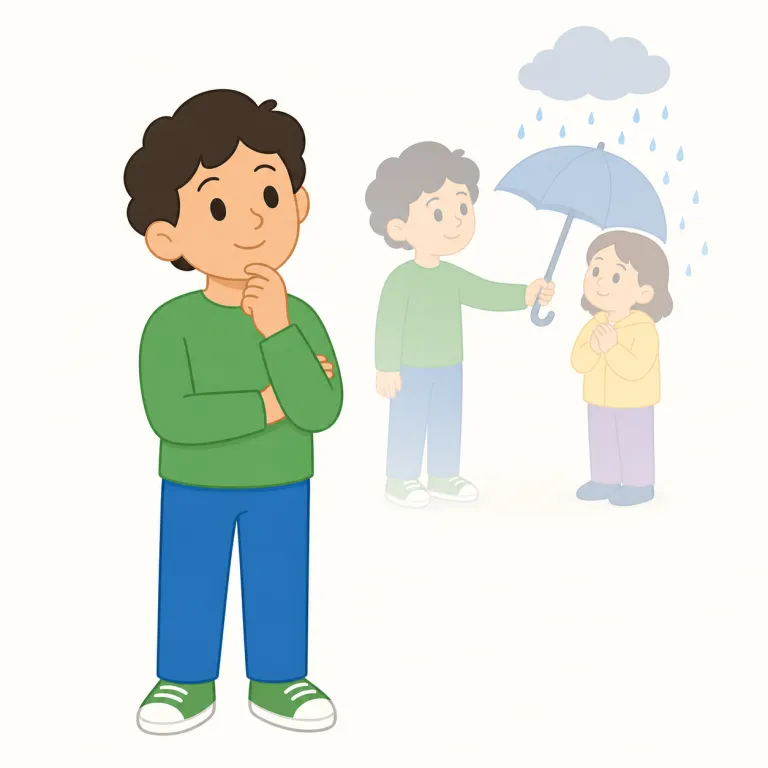
would は歴史的には will の過去形ですが、現代では「過去から見た未来」He said he would come、仮定 I would help、丁寧な希望 would like に使います。「必ずする」という断定ではなく、条件・距離・丁寧さを加える助動詞と捉え、後ろには動詞の原形を置くと覚えましょう。
Remember would as a modal that adds distance: distance from reality in an imagined result, social distance in a polite request, or time distance when describing the future from a past viewpoint. Compare I will help, a direct statement about the future, with I would help, which usually needs an understood or stated condition. Learn three anchors: would like for a polite wish, would help for a conditional action, and said he would come for future-in-the-past. A base-form verb follows would, without to or an -s ending.
例文
I would help you.
私はあなたを手伝うでしょう。
She would like some tea.
彼女はお茶を少し欲しがっています。
He said he would come.
彼は来るだろうと言いました。
would の類義語・関連語
派生語
紛らわしい語
would の語源・成り立ち Etymology
古英語 wolde(willan「望む」の過去形)に由来。ゲルマン祖語 *willjaną から派生し、ドイツ語 wollte と同根。元は「望んだ」という意志を表し、そこから仮定・推量の助動詞へ発展した。関連語: will, willing。
Would developed from Old English wolde, the past-tense form of willan, “to wish” or “to want.” It is related to German wollte and other forms from the same Germanic verb family. The earlier sense of past willingness or intention developed into several modal uses, including future viewed from the past, hypothetical results, polite expressions, and habitual past actions. Its spelling preserves historical letters no longer pronounced separately.
外部辞書で調べる
この単語を英単語クイズで覚えよう