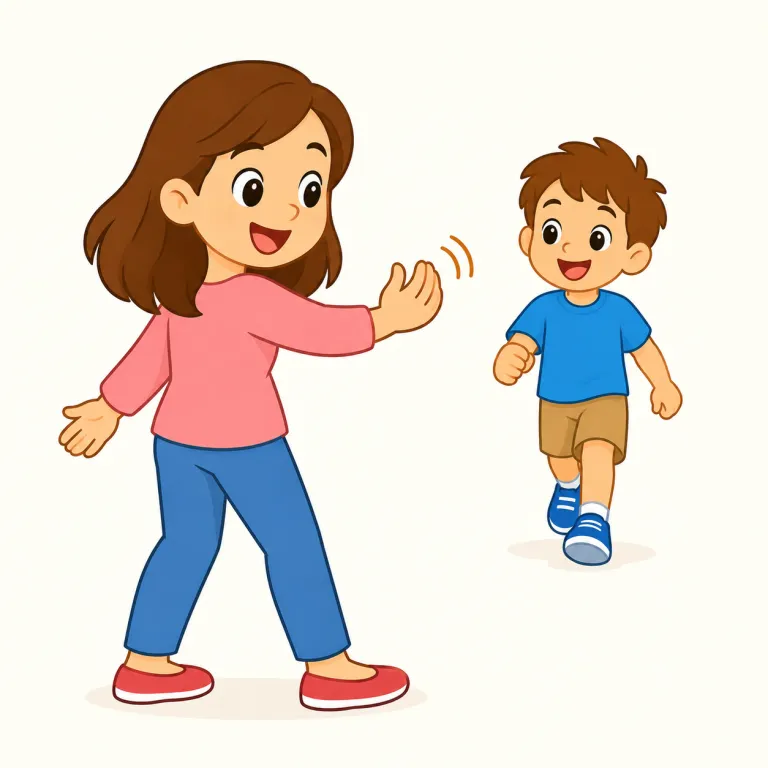
来る
解説 Definition
come は、人や物が話し手のいる場所や基準となる場所へ「来る」「やって来る」という意味の動詞です。予定された場所へ行くことや、ある場所に到着することも表します。Come here. のような命令文では「来てください」「来なさい」という意味になります。
Come means to move toward the speaker, toward a specified place, or to arrive there. It can be used in statements and questions as well as in imperatives such as Come here.
覚え方のコツ Memory Tip
come の核は、話し手や基準となる場所の側へ「来る」ことです。They come here のような平叙文や Will you come? のような疑問文で使えるほか、Come here. と原形を文頭に置けば命令・依頼になります。話し手や基準点から離れる go「行く」と方向を対比して覚えましょう。
The core idea of come is movement toward the speaker or toward a place treated as the speaker’s destination. In these examples, the base form begins an imperative: Come here, Come with me, or Come to the door. Add please at the beginning or end when you want the request to sound more polite. Contrast come with go: come usually points toward “here,” while go points away toward “there.” Remembering this directional pair makes the command easy to use naturally.
例文
They come here every Sunday.
彼らは毎週日曜日にここへ来ます。
Will you come to the party?
パーティーに来ますか。
Please come here.
ここへ来てください。
come の類義語・関連語
come を含む表現
句動詞・イディオムなど 52 件。クリックで各表現の詳細へ。
- come in 入る L1
- come in 到着する、届く L1
- come from 出身である、〜に由来する L2
- come across 偶然出会う L4
- come back 戻る L5
- come rain or shine 何があっても L9
- come clean 白状する L10
- come across 偶然見つける L11
- come across 印象を与える L11
- come into being 誕生する L11
- come up with 思いつく L11
- come up with 工面する L11
- come full circle 元に戻る L12
- come to terms with 折り合いをつける L13
- come before 〜より前に来る、〜に先立つ L14
- come before 優先される L14
- come before 優先される L14
- come hell or high water 何があっても L14
- come out swinging 攻勢に出る L14
- come along 一緒に行く・来る、進む、(機会などが)現れる L15
- come around 立ち寄る、考えを変える L15
- come around 意識を取り戻す L15
- come to a head 危機に至る L15
- come home to roost 悪事の報いを受ける L16
- come off 取れる、外れる L16
- come off 見える L16
- come off 行われる L16
- come off 成功する L16
- come through 乗り切る L16
- come through 届く L16
- come through 伝わる L16
- come through 期待に応える L16
- come in handy 役に立つ L17
- come out with 口にする L17
- come out with 発表する、売り出す L17
- come to a halt 完全に止まる、停止する L17
- come about 起こる L18
- come out 出版される、明らかになる L18
- come out 発売される L18
- come out 明らかになる L18
- come out 同性愛を公表する L18
- come out 出てくる、現れる L18
- may i come in 入ってもよろしいですか L18
- come down to 結局〜に帰する L19
- come down to 〜にかかる L19
- come into 〜に入る、相続する L19
- come into 相続する L19
- come into 発効する、使われ始める L19
- come in contact with ~と接触する、~と接点を持つ L20
- come down with 病気にかかる L22
- come to light 明るみに出る L23
- come away 離れる、印象を得る L25
come の語源・成り立ち Etymology
古英語 cuman(来る)からゲルマン祖語 *kwemaną に遡る。インド・ヨーロッパ語根 *gʷem-(行く・来る)が起源で、ラテン語 venire(来る)も同根。venue(会場=人が来る場所)やconvene(集まる)と親戚。「移動してこちらへ至る」が核心の意味。
Come descends from Old English cuman, meaning “to come,” and ultimately from a Proto-Germanic verb reconstructed as *kwemaną. It is connected with the Indo-European root *gʷem-, referring to going or coming. The word has therefore preserved its basic idea of movement toward a destination for many centuries. More distant historical relatives include Latin venire, the source behind English words such as convene and venue.
同じレベルの語彙をもっと
外部辞書で調べる
この英単語をクイズで覚えよう