
what
what は英検7級レベルの英単語で、「何、どんな」という意味があります。発音記号は /wʌt/ です。
意味一覧 (2件)
何
解説 Definition
人や物事の内容・正体・種類をたずねる最も基本的な疑問語。文頭で「何が」「何を」のように使うほか、名詞の前で「どんな」「何の」の意味にもなる。会話では聞き返しや驚きを表す表現にもよく使われる重要語である。
What is used to ask about things, ideas, or actions. It helps you ask for information when the answer is not known. It can also introduce a clause, especially when referring to the thing that someone said, did, or thought.
覚え方のコツ Memory Tip
what は wh-疑問語の中心だと押さえると覚えやすい。who が「だれ」、where が「どこ」なら、what は「何・何の・どんな」。まず "What is this?" の型で内容や正体を聞く語として固定し、名詞の前では "what time" "what kind" のように種類・内容を絞る形で覚えると広がる。which は選択肢が見えているとき、what はもっと広く中身をたずねるとき、という違いもセットで意識すると混同しにくい。会話では単独で "What?" と聞き返しにもよく出る。
Put `what` in the WH-question family: `who` asks about people, `where` asks about place, and `what` asks about the thing itself. Start with the strong pattern `What is this?` and then expand to `what time` or `what kind`. To avoid confusion, remember that `which` is usually for choosing from clear options, but `what` is wider.
例文
What is this?
これは何ですか。
What do you see?
何が見えますか。
What is in the box?
箱の中に何がありますか。
どんな
(意味 2)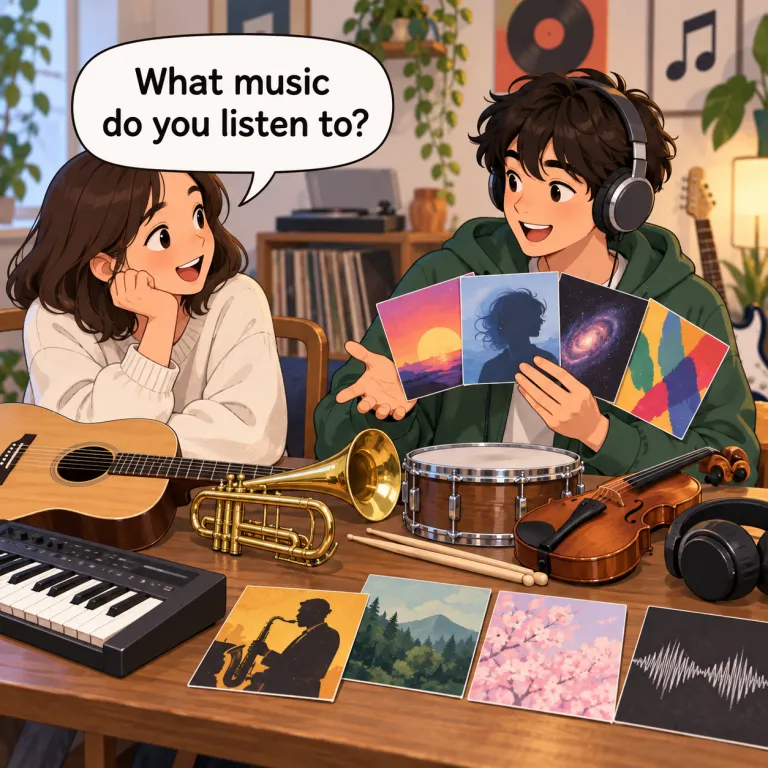
解説 Definition
名詞の前に置いて、種類・性質・内容をたずねるときに使う語です。単独で「何」と問うのではなく、後ろの名詞を修飾して「どんな〜」という意味を作ります。相手に物事の特徴やタイプを説明してほしい場面でよく使われます。
A determiner placed before a noun to ask about its type, qualities, or content. It invites an open answer about the noun rather than a selection from a stated set of choices.
例文
What music do you listen to?
あなたはどんな音楽を聴きますか。
What books does she read?
彼女はどんな本を読みますか。
What food do they sell here?
ここではどんな食べ物を売っていますか。
what の類義語・関連語
派生語
what を含む表現
句動詞・イディオムなど 12 件。クリックで各表現の詳細へ。
- what a surprise なんて驚きだ L3
- what about ~はどう? L6
- what time should we meet 何時に会いましょうか L6
- what to 何をすべきか L6
- what to 何を〜するか L6
- what a surprise びっくりした L7
- what is called いわゆる L8
- what is more さらに L8
- what goes around comes around 因果応報 L11
- what is worse さらに悪いことには L11
- for what it's worth 参考までに L12
- what if もし〜なら L16
what の語源・成り立ち Etymology
古英語 hwæt に由来し、さらにゲルマン祖語をさかのぼる非常に古い語。who、when、where などの疑問語と同じ語族に属し、英語の基本的な wh- 語の中心となる単語である。
From Old English hwæt, from an ancient Germanic interrogative root. It belongs to the same family as who, when, and where. The word has long kept its central role as one of the main English question words.
同じレベルの語彙をもっと
英検7級の一覧へ →外部辞書で調べる
この英単語をクイズで覚えよう