who
who は英検7級レベルの英単語で、「誰、〜する人」という意味があります。発音記号は /huː/ です。
意味一覧 (2件)
誰
解説 Definition
人をたずねるときに使う疑問語で、「だれ」「どんな人が」に当たる。主語としても目的語としても使え、相手の身元、担当者、発言者などを確認するときに非常によく現れる。文脈によっては丁寧に「どなた」と訳す感覚に近づくこともある。
Who is used to ask or talk about a person or people. It helps identify the person involved in an action or situation. It is not used for things or animals unless they are treated like people.
覚え方のコツ Memory Tip
what が「何」、where が「どこ」なら、who は WH疑問詞の中で「人」を聞く担当だとセットで覚える。まず “Who are you?” “Who said that?” “Who did you meet?” をひとかたまりで覚えると、主語にも目的語にも出る基本語だと定着しやすい。which は「どの〜(候補あり)」、what は「何」、whose は「誰の」と役割を並べて整理すると混同しにくい。つづりは wh- でも発音は /huː/ で h を読まない点も要注意。
Remember `who` as the WH-word for people. It fits easy patterns like `Who are you?`, `Who said that?`, and `Who did you meet?`, so you can learn it in ready-made chunks. Also be careful with pronunciation: it is spelled with `wh-`, but sounds like `hoo`.
例文
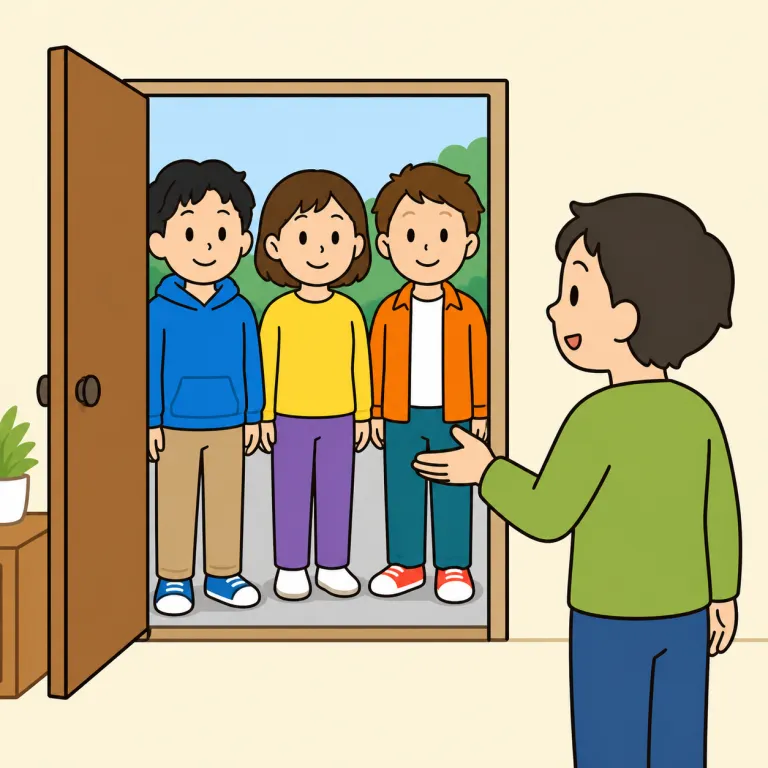
Who is at the door?
ドアのところにいるのは誰ですか。
Who has my bag?
私のかばんを持っているのは誰ですか。
Who is your friend?
あなたの友だちは誰ですか。
〜する人
(意味 2)
解説 Definition
人を表す先行詞を受けて、その人について説明を加えるときに使う語です。関係代名詞として使われ、「…する人」「…である人」のように訳されます。疑問の「誰」とは働きが異なります。
Refers back to a person or group of people and introduces more information about them. It begins a clause describing what those people do or what they are like.
覚え方のコツ Memory Tip
who は疑問の「誰?」だけでなく、名詞の後ろで「その人はどんな人か」をつなぐ語として覚える。the person who helped me は「私を助けた人」、a student who can speak three languages は「3か国語を話せる学生」。先に人を出してから、who 以下でその人の説明を足すイメージです。Who are you? のように文頭で質問する用法とは切り分け、名詞の後ろに来た who は「〜する人」と訳す合図だと考えると混同しにくい。
Start with a person, then use who to add a description: “the person who helped me.” Think of it as a bridge from the person to information about them.
例文
She is the person who helped me yesterday.
彼女は昨日私を助けてくれた人です。
I know a student who can speak three languages.
私は3か国語を話せる学生を知っています。
People who exercise regularly often sleep better.
定期的に運動する人はよく眠れることが多い。
who の語源・成り立ち Etymology
古英語 hwā に由来し、さらにゲルマン祖語 *hwas、印欧祖語の疑問語幹 *kwo- / *kwe- にさかのぼる。同系の語に what、when、where などがあり、英語の基本的な疑問語グループを形作っている。
From Old English hwā, from Proto-Germanic *hwas and an even older Indo-European question root. It is closely related to other English wh- words such as what, when, and where. The word has remained a core part of the language for asking about people.
同じレベルの語彙をもっと
英検7級の一覧へ →外部辞書で調べる
この英単語をクイズで覚えよう