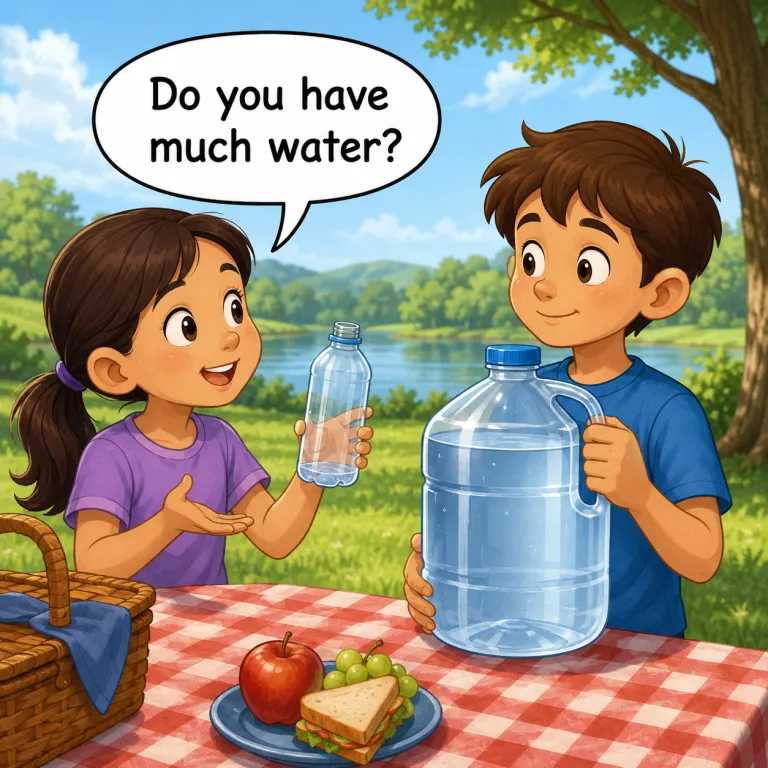
much
much は英検5級・英検7級レベルの英単語で、「多くの、とても」という意味があります。発音記号は /mʌtʃ/ です。
意味一覧 (2件)
多くの
解説 Definition
数えられない名詞の量が多いことを示す語で、主に疑問文や否定文で用いられます。名詞の前で「多くの」「たくさんの」を表し、much of ... の形で全体の中の大部分を指す用法もあります。
A large amount or a large degree. It is often used with uncountable nouns, such as money, time, or water, and in questions or negative statements. In positive statements, English often uses "a lot of" instead.
覚え方のコツ Memory Tip
much は many の「不可算版」とセットで覚えると定着しやすい語です。many books に対して much water, much time のように、数えられない量につきます。ふつう肯定文では a lot of が自然で、much は疑問文・否定文でよく出るのが重要なクセです。How much money...? / not much time の形をまとめて覚えるとよいです。さらに much of the time, much better のように「量」だけでなく「程度」を強める働きもある、と押さえると見分けやすくなります。
Remember much as the partner of uncountable nouns, while many goes with countable nouns. Think of pairs like many books but much time or much water. It appears a lot in questions and negatives, so How much...? and not much are useful memory anchors.
例文
I do not have much water.
水があまりありません。
There is not much milk here.
ここには牛乳があまりありません。
Do you have much time?
時間はたくさんありますか。
えいたんごクイズでの正答率
この語をはじめて出題された 36人 のうち 31人 が正解しました(86%)。
えいたんごクイズの回答から集計した独自データです。1人につき最初に出題されたときの1回だけを数えており、復習や2回目以降の回答、「わからない」と時間切れは含みません。 集計時点は 2026年9月19日 です。
とても
(意味 2)
解説 Definition
much が副詞のときは、形容詞・副詞・動詞などを強めて「とても」「大いに」のような程度の高さを表す。比較表現や prefer などとよく組み合わさり、量の多さそのものではなく、差がどれほど大きいか、気持ちがどれほど強いかを述べるときに使う。
To a great degree, especially when describing a difference or a strong feeling. This adverb often strengthens comparisons or verbs expressing preference and liking.
覚え方のコツ Memory Tip
much は副詞では「量が多い」よりも、「程度が大きい」と見ると覚えやすいです。Thank you very much は感謝の量ではなく、感謝の強さが大きいということ。much better, much prefer, much more のように、差・好み・感情をぐっと強めます。much water のような不可算名詞につく用法とは切り分けて、この行では形容詞・動詞・比較を強める『とても/ずっと』として覚えると定着します。
Think of much as making a difference or feeling bigger in this use. Learn 'much better' and 'much prefer' to connect it with a larger difference or stronger preference. In 'Thank you very much,' it strengthens your gratitude.
例文
Thank you very much.
本当にありがとうございます。
I like tea very much.
私は紅茶がとても好きです。
I love my dog very much.
私は自分の犬が大好きです。
much の類義語・関連語
much に関連する文法
この単語の使い方とセットで覚えると効果的な文法解説。
much を含む表現
句動詞・イディオムなど 4 件。クリックで各表現の詳細へ。
much の語源・成り立ち Etymology
much は中英語 muchel、古英語 micel を経て、印欧祖語 *meg-「大きい」に由来します。単純語ですが mega や magnify と同根で、もともと「量が多い」以前に「大きい」が核だから、程度を強める much の使い方も自然に見えてきます。
"Much" comes from Old English "micel," later Middle English "muchel," and is linked to Proto-Indo-European "*meg-," meaning "great" or "large." Its older sense was closer to "big" than simply "a lot." That is why it connects well with related words such as "mega" and "magnify," which also carry the idea of greatness.
同じレベルの語彙をもっと
英検5級の一覧へ →外部辞書で調べる
この英単語をクイズで覚えよう