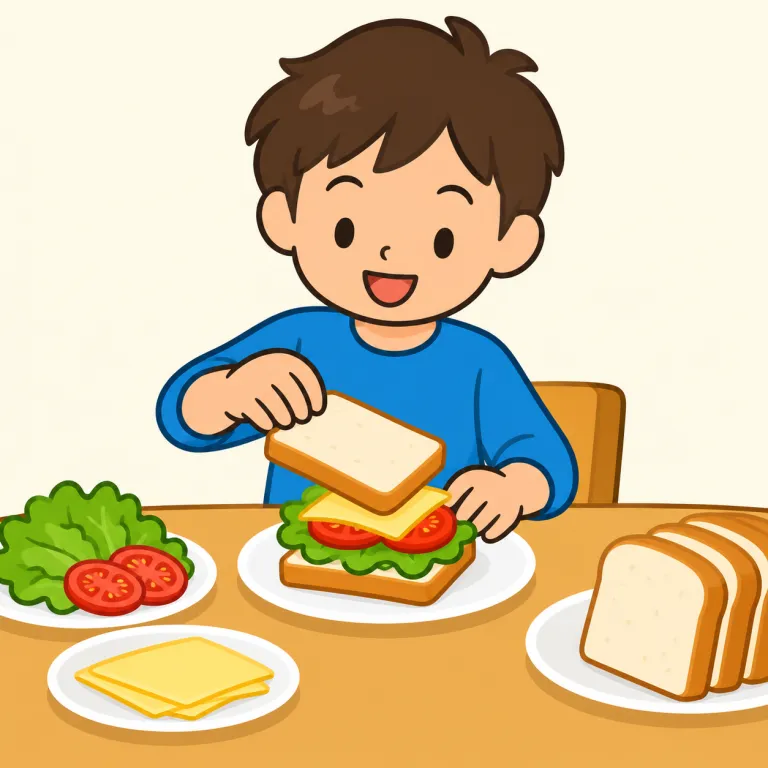
作る
解説 Definition
making は make(作る)の -ing 形です。「作っている」「作ること」という意味で、進行形や動名詞として使われます。
The present participle or gerund form of make, referring to the process or activity of creating, producing, preparing, or forming something. It is used in continuous verb forms and as a noun-like expression for an activity.
覚え方のコツ Memory Tip
原形 make の -ing 形です。語末の発音しない e を落として -ing を付けるため、makeing ではなく making になります。発音は /ˈmeɪkɪŋ/。be making なら「作っている」、文の主語になる Making bread なら「作ること」と、進行形と動名詞の二役を例文で覚えましょう。
Connect making to its base verb make. The spelling rule is important: when -ing is added, the silent final e of make is removed, producing making, not “makeing.” In “I am making lunch,” it is part of a continuous verb form and shows an activity in progress. In “Making bread takes time,” it is a gerund and names the activity itself. Picture materials or ingredients being formed into a finished result; this central image works for making a card, a meal, or bread.
例文
I am making lunch.
私は昼食を作っています。
She is making a card.
彼女はカードを作っています。
Making bread takes time.
パンを作るには時間がかかります。
making の類義語・関連語
対義語
紛らわしい語
making の語源・成り立ち Etymology
古英語 macian(作る、形づくる)からゲルマン祖語 *makōną に遡る。原義は「粘土をこねて形にする」こと。match(釣り合う=うまく作り合わせる)と同根とされる。「無から有を生む」のではなく「素材を形にする」が本来の感覚である。
Making is the -ing form of make. Make comes from Old English macian, meaning “to make, form, or construct,” and belongs to a Germanic word family. Its long history centers on bringing something into a particular form or condition. In modern spelling, the silent final e of make is dropped before the participial and gerund suffix -ing is attached, yielding making.
外部辞書で調べる
この英単語をクイズで覚えよう