不戦勝、試合免除による自動進出
noun 名詞スポーツの勝ち抜き戦で、対戦相手がいないため試合をせずに次の回へ進むことを指す。get a bye や receive a bye の形で使われ、別れのあいさつとは語源も意味も異なる同綴り語である。
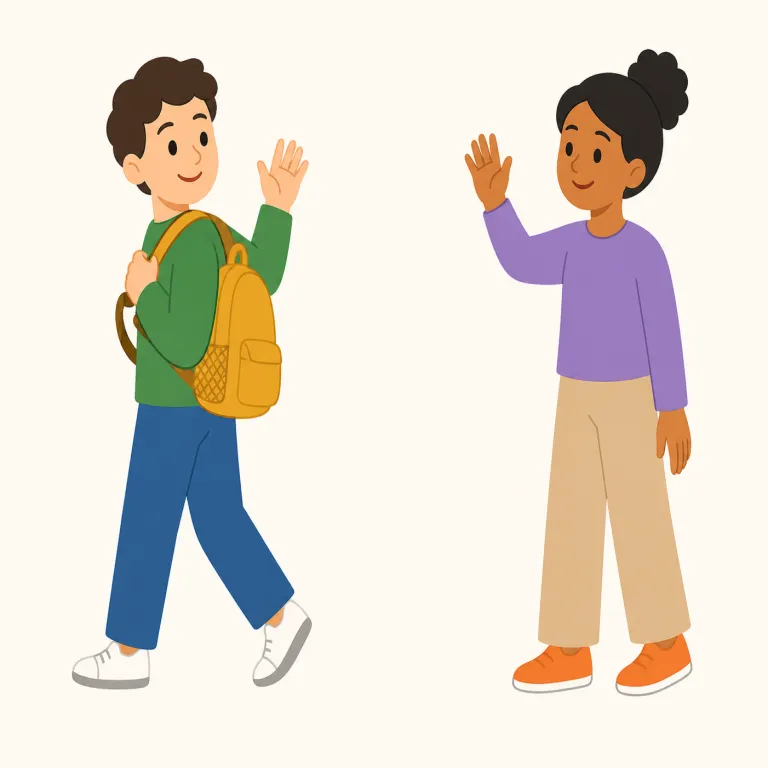
別れ際や会話を終えるときに使う、くだけたあいさつです。「さようなら」「じゃあね」に当たり、友人・家族・同僚との日常会話でよく使います。
Bye is a casual word people say when leaving or ending a conversation. It means you are saying goodbye in a friendly, simple way. It is very common in everyday spoken English and informal messages.
bye は goodbye の短い形。hi が会話の入口なら、bye は出口、と対にして覚えましょう。
Bye is the short form of goodbye. If hi opens a conversation, bye closes it.
Bye, Mom, see you later.
じゃあね、お母さん、またあとで。
Bye, Dad, have a nice day.
じゃあね、お父さん、よい一日を。
Bye, everyone, see you tomorrow.
じゃあね、みんな、また明日。
文脈によって、次の意味でも使われます。
スポーツの勝ち抜き戦で、対戦相手がいないため試合をせずに次の回へ進むことを指す。get a bye や receive a bye の形で使われ、別れのあいさつとは語源も意味も異なる同綴り語である。
“goodbye” の短縮形として定着した語です。さらにさかのぼると “God be with ye” に由来し、別れのあいさつが時代とともに短く口語化して現在の “bye” になりました。
"Bye" is a shortened form of "goodbye." "Goodbye" itself came from the older farewell phrase "God be with ye." As the full expression became shorter and more informal in speech, it finally settled into the modern form "bye."
この英単語をクイズで覚えよう