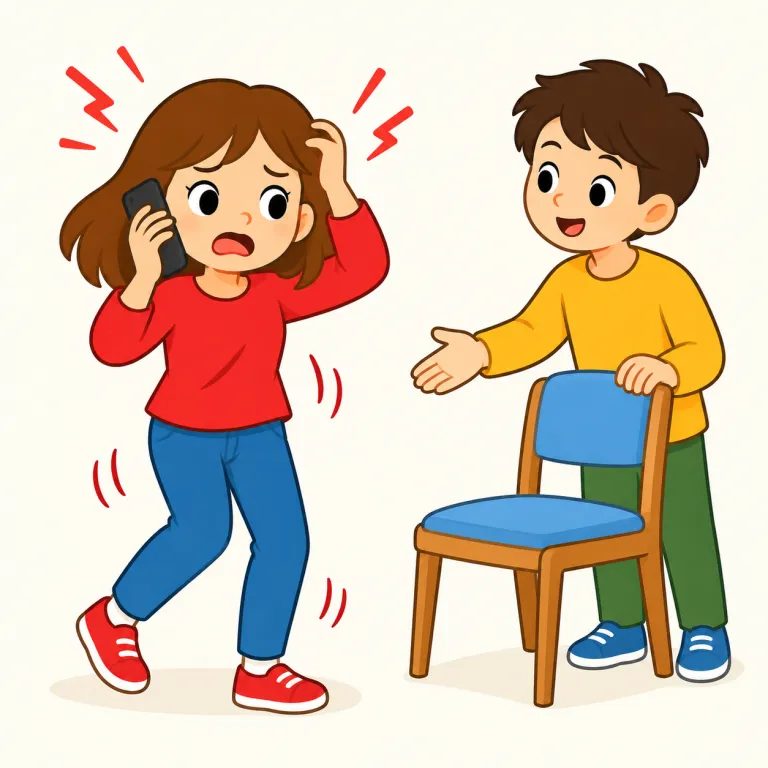
興奮した
解説 Definition
agitated は agitate(動揺させる、かき乱す)の過去形・過去分詞で、形容詞としては興奮した、動揺したという意味です。怒りや不安で落ち着かない状態を表すときによく使われます。
Feeling or showing strong nervousness, anxiety, anger, or excitement, so that calm behavior becomes difficult. It can describe a person, a crowd, a voice, or other visible signs of emotional disturbance.
覚え方のコツ Memory Tip
agitated は agitate「揺り動かす、動揺させる」の過去分詞が形容詞化した語。語末 e があるため -d を加え、発音は /ˈædʒɪteɪtɪd/ で -ed が /ɪd/ の一音節になる。agitated voice・crowd や look agitated のように、不安や怒りで心身がかき乱され、calm でない状態と結び付ける。
Connect agitated with the verb agitate, “to stir up or disturb.” Since the verb already ends in e, its past participle adds d, and the ending is pronounced as a separate /ɪd/ syllable after /t/: /ˈædʒɪteɪtɪd/. Imagine emotions being shaken or stirred until a person can no longer remain calm. Typical combinations include look agitated, an agitated voice, and an agitated crowd. The word often points to anxiety or anger expressed through restless movement or tense speech; excited can be positive, but agitated usually suggests distress or loss of composure.
例文
She looked agitated after the long phone call.
長い電話のあと、彼女は動揺しているように見えました。
The crowd became agitated when the train was delayed again.
電車がまた遅れると、群衆は興奮して落ち着かなくなりました。
He spoke in an agitated voice during the meeting.
彼は会議中、興奮した声で話しました。
agitated の類義語・関連語
対義語
紛らわしい語
agitated の語源・成り立ち Etymology
agitated は agitate に形容詞化・受け身を表す -ed が付いた形です。agitate はラテン語 agitare「揺り動かす・かき立てる」に由来し、さらに agere「動かす」にさかのぼるため、心や体が強く揺さぶられた状態から「興奮した」という意味になりました。関連語は agent, action です。
Agitated is the past participle of agitate, with the ending -ed. Agitate entered English through Latin agitare, meaning “to set in motion, drive, or keep moving,” an intensive or frequentative form related to agere, “to do, drive, or act.” A physical sense of shaking or stirring developed into the emotional idea of disturbing someone’s mind. As an adjective, agitated describes a person or manner visibly stirred by anxiety, anger, or excitement.
同じレベルの語彙をもっと
外部辞書で調べる
この英単語をクイズで覚えよう