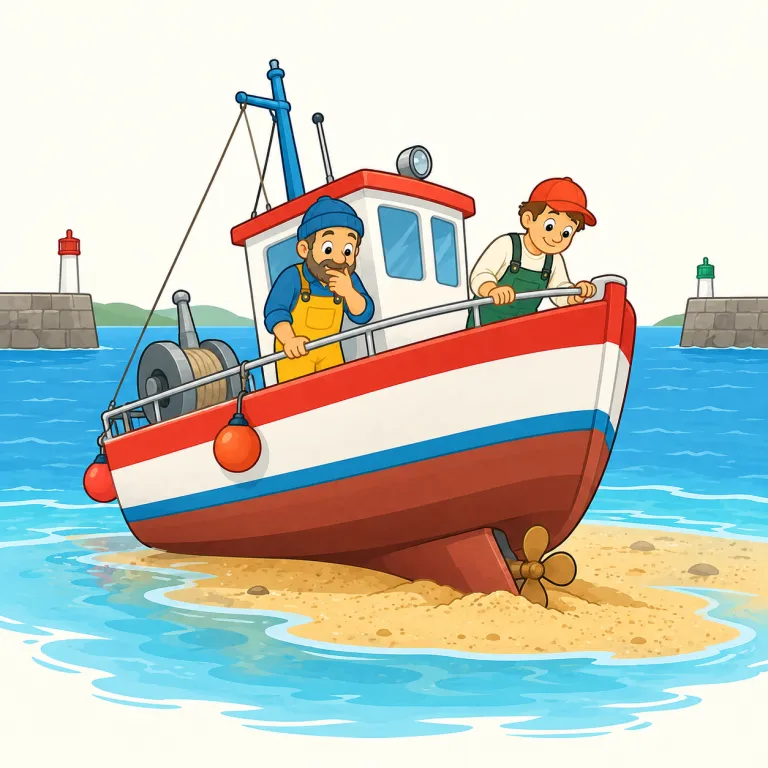
座礁
解説 Definition
aground は ground(地面・海底)に由来する語で、船などが座礁している、浅瀬に乗り上げているという意味です。run aground や go aground の形でよく使われ、比喩的に計画が行き詰まる意味でも使われますが、ここでは船の座礁を表します。
Aground means resting on or stuck against the seabed, shore, or another underwater obstruction so that a vessel cannot move freely. It commonly follows be or verbs such as run and go, as in the boat ran aground.
覚え方のコツ Memory Tip
a-「〜の上に」+ ground「地面・海底」で、水に浮くべき船が海底に接した状態を表します。be aground は座礁中、run aground や go aground は「座礁する」。活用形ではなく、主に叙述用の形容詞・副詞として使う一語です。
See the structure as a- plus ground: a vessel that should be floating is now caught “on the ground” beneath the water. This physical image explains the nautical meaning immediately. Learn the common patterns rather than treating the word as a noun: a boat is aground, runs aground, or goes aground. “Was aground” describes the resulting state, while “ran aground” focuses on the event. The word can be figurative elsewhere, but for this entry keep the picture of a ship stuck on the seabed and waiting for the tide to rise.
例文
The fishing boat was aground near the harbor entrance.
その漁船は港の入り口近くで座礁していました。
A small ferry ran aground during the night.
小さなフェリーが夜の間に座礁しました。
The crew waited for the tide to rise after the ship went aground.
船が座礁した後、乗組員は潮が満ちるのを待ちました。
aground の類義語・関連語
aground の語源・成り立ち Etymology
古英語由来の接頭辞「a-(~の上に)」と語根「ground(海底)」から成り、文字通り「海底の上に載る」状態を表します。船が水底に接して自走不能となる様子から、そのまま「座礁」という意味が定着しました。同語根の関連語にground(地面)やunderground(地下)があります。
Aground combines ground with the old locative prefix a-, historically related to a reduced form meaning “on” or “in.” Its literal idea is therefore “on the ground.” In nautical use, ground refers to the seabed or bottom beneath the water, so a vessel aground has made contact with it and become stuck. The word is not an inflected form of ground.
同じレベルの語彙をもっと
外部辞書で調べる
この英単語をクイズで覚えよう