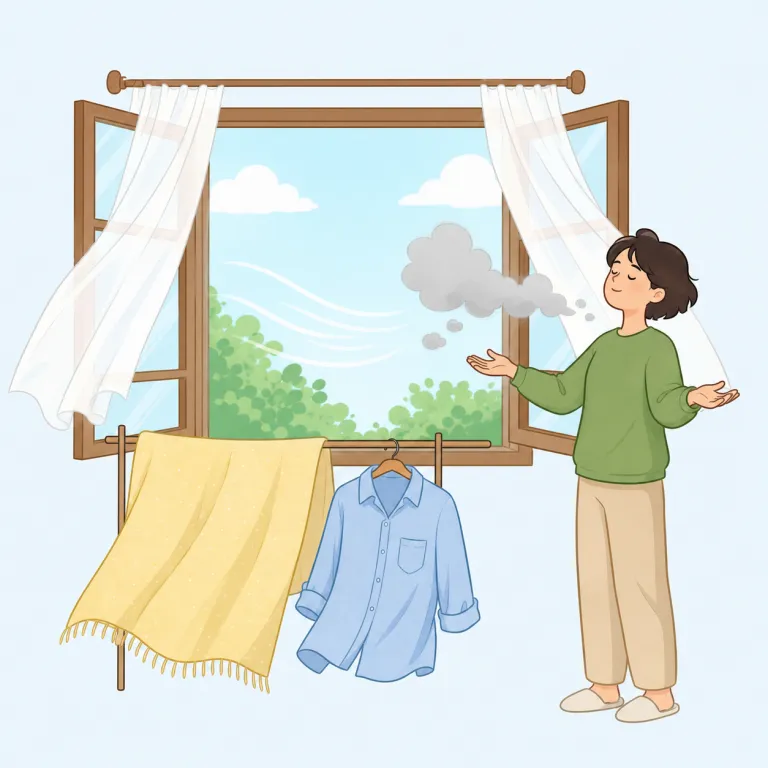
air out
air out は英検準1級・TOEIC 600レベルの英熟語で、「風を通す、不満などを率直に表す」という意味があります。発音記号は /ˈɛər ˈaʊt/ です。
風を通す
解説 Definition
部屋、衣類、寝具などを空気にさらし、こもったにおいや湿気を取り除く。外に干す場合も、空気を通すことに焦点がある。
To let fresh air pass through or around a room, garment, or other object so that trapped odors or moisture can dissipate. Drying something outdoors can be included when exposure to air is the focus.
覚え方のコツ Memory Tip
airは「空気」、outは「外へ」で、部屋や寝具に新しい空気を通し、こもったにおいや湿気を外へ出すイメージです。open the windows to air out the roomのように、窓を開けて換気する場面でよく使います。単に外へ運ぶのではなく、空気にさらすことが中心です。
Picture fresh air going in while dampness and stale odors go out. The key idea is exposure to moving air, even when drying is one of the results.
例文
We opened the windows to air out the room after cooking.
料理のあと、部屋のにおいを取るために窓を開けて風を通した。
Please air out the sleeping bags before you store them.
寝袋をしまう前に風を通してください。
He left his damp shoes outside to air them out.
彼は湿った靴に風を通すため、外に置いておいた。
不満などを率直に表す
(意味 2)
解説 Definition
不満、懸念、意見の相違などを隠さず表に出し、率直に述べたり話し合ったりする。物理的に風を通す用法とは目的語と意味が異なる比喩的用法。
To bring grievances, concerns, or disagreements into the open by expressing or discussing them frankly. This is the figurative counterpart of exposing something to fresh air.
覚え方のコツ Memory Tip
air out は、不満や意見の相違を内に閉じ込めず、外へ出して率直に話すことです。air out grievances「不満を表明する」、air out differences「意見の相違を話し合う」と覚えます。部屋などに「風を通す」場合とは異なり、この語義では感情や問題が対象です。
Imagine letting trapped concerns out into the open just as stale air is released from a room. Common objects include grievances, concerns, and differences.
例文
The employees finally aired out their grievances at the forum.
従業員たちはその意見交換会で、ついに不満を率直に表明した。
They met privately to air out their differences before negotiations resumed.
交渉を再開する前に、彼らは非公開で会い、意見の相違を率直に話し合った。
It is better to air out your concerns than let resentment build.
不満を募らせるより、懸念を率直に口にするほうがよい。
air out の類義語・関連語
類義語
対義語
air out の語源・成り立ち Etymology
airは「空気」を表す語で、outは「外へ」を表す。この句動詞では、対象を空気に十分さらして、こもったものを外へ逃がすという組み合わせになっている。
Air is the word for the atmosphere around us, and out contributes the idea of outward movement or thorough exposure. Together they form the physical sense of exposing something to fresh air.
同じレベルの語彙をもっと
英検準1級の一覧へ →外部辞書で調べる
この英熟語をクイズで覚えよう