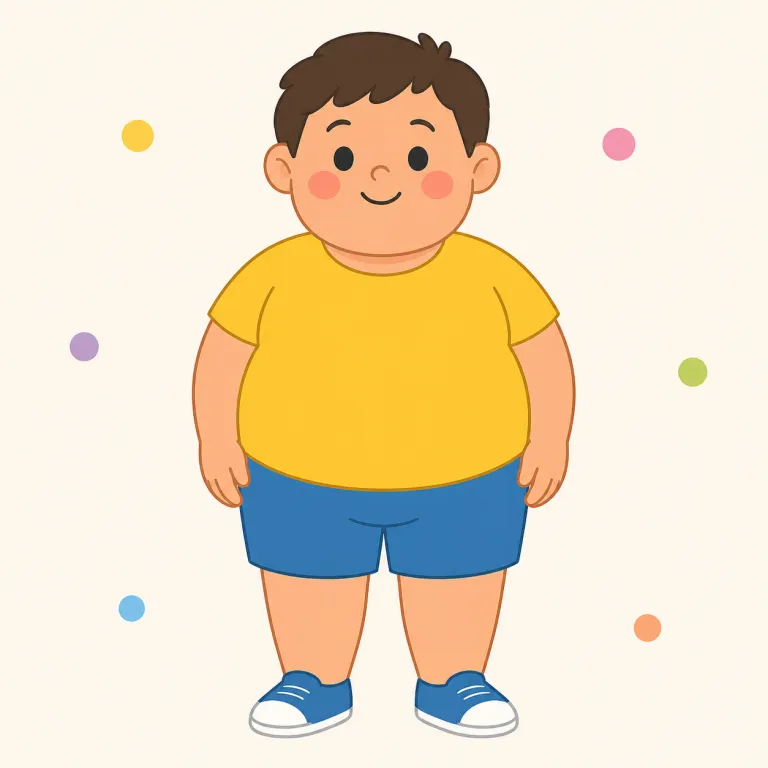
chubby
chubby は英検準1級レベルの英単語で、「ぽっちゃり」という意味があります。発音記号は /ˈtʃʌbi/ です。
ぽっちゃり
解説 Definition
ぽっちゃりしたという意味で、少し太っていてふっくらとした体型を表す形容詞です。「太っている」よりも柔らかく親しみやすいニュアンスがあり、特に子どもや赤ちゃんを描写する際によく使われます。
Chubby describes a person, especially a child, with a slightly fat and round body. It usually suggests a soft or mild kind of heaviness rather than being very overweight. Depending on the situation, it can sound affectionate or sometimes impolite.
覚え方のコツ Memory Tip
fat は「太っている」とかなり直接的、overweight は体重データ寄り、plump はやや上品、chubby はその中でも「丸みがあって愛嬌のある」ぽっちゃりを表す語。特に赤ちゃんや子どもの chubby cheeks, chubby arms のように、ほほや腕がふっくらしている場面でよく出る。語尾 -y は sunny, cloudy と同じく「そんな感じの」を作るので、chub + y で「丸っこい感じ」と覚えるとよい。大人に使うと文脈次第で失礼になりうる点も押さえる。
Remember `chubby` as a softer, friendlier word than `fat`. It is often used in warm, familiar phrases like `chubby cheeks` or `chubby arms`, especially for babies and children. The ending `-y` can help you feel the sense of "having that quality," like `cloudy` or `sunny`. Be careful with adults, because it can sound rude depending on the situation.
例文
Everyone loved the chubby baby with pink cheeks.
みんな、ピンク色の頬をしたぽっちゃりした赤ちゃんをかわいがった。
He was chubby as a child but slim as a teenager.
彼は子どもの頃はぽっちゃりしていたが、十代ではスリムだった。
The chubby squirrel ate too much food every day.
そのぽっちゃりしたリスは毎日食べ物を食べすぎていた。
chubby の類義語・関連語
chubby の語源・成り立ち Etymology
chubby は chub「ずんぐりしたもの・丸い魚」からできた語に、形容詞語尾 -y が付いた形です。もとは「丸くて小太りな感じ」を表し、そこから「ぽっちゃりした」の意味になりました。関連語に chub, chubbiness があります。
Chubby comes from chub with the adjective ending -y. Chub referred to something short, thick, or round, and it was also the name of a stout fish. From that idea of roundness and heaviness, chubby developed into the modern sense of pleasantly fat or plump; related forms include chubbiness.
同じレベルの語彙をもっと
英検準1級の一覧へ →外部辞書で調べる
この英単語をクイズで覚えよう