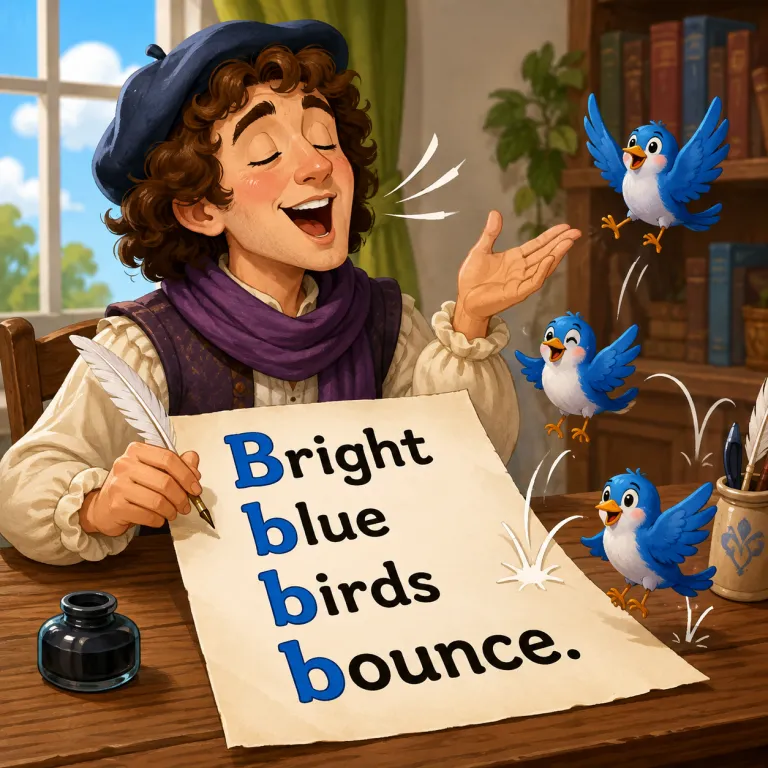
頭韻の
解説 Definition
頭韻を用いた、または語頭音の反復が目立つことを表す形容詞です。詩・標語・文体などで、連続する語が同じ音で始まるような表現に使われます。
Alliterative describes language in which nearby words begin with the same sound or letter. It is commonly used when talking about poetry, slogans, titles, or other creative writing. The word focuses on sound patterns rather than meaning.
覚え方のコツ Memory Tip
alliteration(頭韻)や alliterate を見たことがあれば、まずその仲間だとつなげると覚えやすい語です。-ive は「〜の性質をもつ」という形容詞語尾なので、alliterative は「頭韻を使った」「同じ語頭音がそろう感じの」という意味。poetry, style, phrase などと結びつきやすく、音の響きのよさを話題にするときに出やすいです。rhyme は語尾の響き、alliterative は語頭の反復、と対比すると混同しにくくなります。
Link it to `alliteration`, which has the same word family. The `-ive` ending means it describes something with that quality, so `alliterative` means using repeated first sounds. Remember the contrast: `rhyme` repeats ending sounds, but `alliterative` repeats beginning sounds.
例文
The poet used alliterative phrases to enhance the rhythm.
詩人はリズムを強化するために頭韻表現を使用した。
Alliterative language is common in nursery rhymes.
頭韻を用いた表現は童謡によく見られる。
The advertisement used alliterative slogans to be memorable.
その広告は記憶に残るように、頭韻を用いたスローガンを使った。
alliterative の類義語・関連語
類義語
対義語
派生語
alliterative の語源・成り立ち Etymology
alliterative は中世ラテン語 alliterare に由来し、ad-「〜へ」+ littera「文字」が核です。literal や literature と同じ語根をもち、「同じ文字へ寄せる」感覚から、語頭音を反復する「頭韻の」という意味になります。
`Alliterative` comes from Medieval Latin `alliterare`, built from `ad-` and `littera` meaning "letter." It shares its root with English words like `literal` and `literature`. The original idea was of bringing words to the same letter, which later became the pattern of repeating the same opening sound.
同じレベルの語彙をもっと
外部辞書で調べる
この英単語をクイズで覚えよう