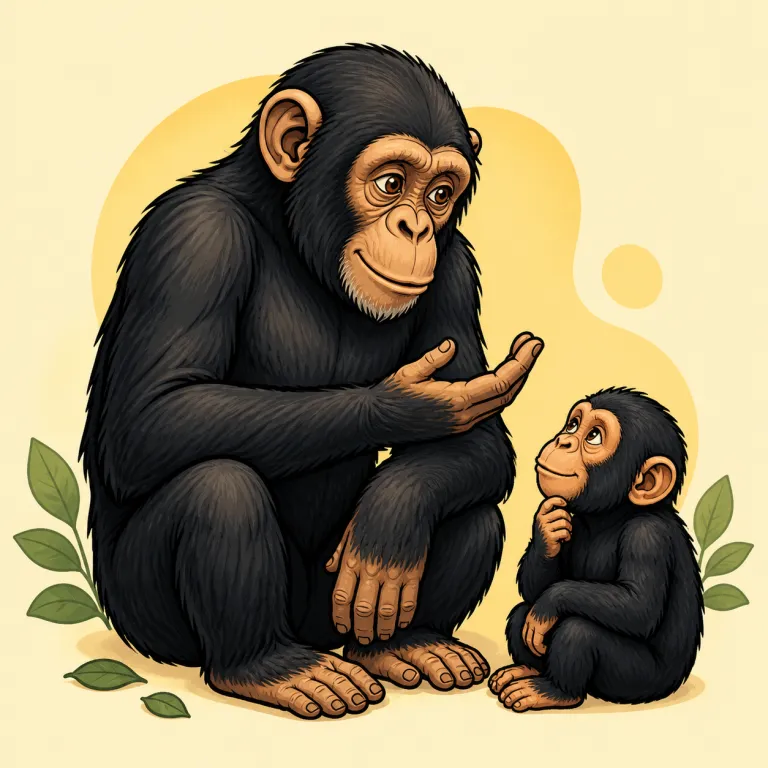
人間に似た、人間の形をした
adjective 形容詞外見や形態が人間に似ていることを表す。人型の物や、人間に似た身体的特徴について用い、霊長類そのものを指す既存の名詞用法とは区別される。
この語義では、人に似た霊長類である類人猿を指し、テナガザル類と大型類人猿を含みます。なお、動物学では anthropoid がサル類・類人猿・ヒトを含む、より広い群を指すこともあります。
An anthropoid is a human-like ape or other primate, especially in scientific classification. The word is mostly used in biology and sounds formal or old-fashioned in general English.
anthropology(人類学)の anthrop- から「人」を連想し、-oid を「~に似た」という手掛かりにして、この語義の anthropoid を「人に似た霊長類」→「類人猿」と覚えましょう。類人猿には大型類人猿だけでなくテナガザル類も含まれます。また、動物学ではサル類・類人猿・ヒトを含む広い分類名として使われる場合もあります。
The first part, `anthrop-`, appears in `anthropology` and points to humans. The ending `-oid` means `like` or `similar to`, as in `humanoid`. So `anthropoid` becomes easy to remember as `human-like`, which fits apes and similar primates.
Anthropoids are among our closest living relatives in the animal kingdom.
類人猿は、動物界において私たちに最も近い現生の近縁種に含まれます。
The zoo's new exhibit shows how an anthropoid communicates.
動物園の新しい展示では、類人猿がどのように意思を伝えるかを紹介しています。
Scientists study the intelligence of anthropoids to understand human evolution.
科学者は人類の進化を理解するために類人猿の知性を研究しています。
文脈によって、次の意味でも使われます。
外見や形態が人間に似ていることを表す。人型の物や、人間に似た身体的特徴について用い、霊長類そのものを指す既存の名詞用法とは区別される。
anthropoid はギリシャ語 anthropos「人間」+ -oid「〜のような形の」から成る語です。直訳すると「人間のような姿をしたもの」で、類人猿を指す意味が腑に落ち、anthropology や misanthrope も同じ anthropos を受け継ぎます。
Anthropoid comes from Greek anthropos "human being" and -oid "like" or "in the form of." It literally meant "human-like in form." That is why it came to be used for beings, especially apes, that resemble humans; anthropology and misanthrope share the same anthropos root.
この英単語をクイズで覚えよう