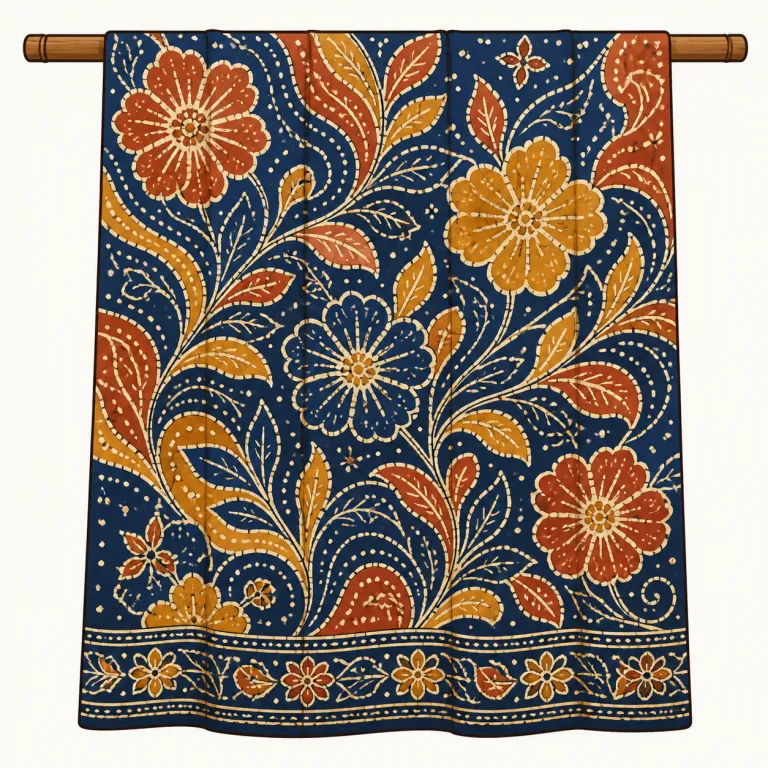
バティック布、ろうけつ染め作品
noun 名詞ろうけつ染めで模様を付けた布、またはその技法による作品を指す。布地としては不可算名詞、個々の壁掛けや作品を指す場合は可算名詞として用いられ、技法そのものではなく完成品に焦点を置く。
ろうけつ染めの一種で、布にろうで模様を描き、染料で染める伝統的な染色技法です。インドネシアを中心に東南アジアで広く行われています。
Batik is a method of making designs on cloth by covering parts with wax before dyeing it. It can also mean the finished fabric or pattern made in this way. The word is often used in art, fashion, and traditional textiles.
batik は単独で覚えるより、batik shirt, batik pattern, batik fabric のまとまりで覚えると残りやすい語です。ポイントは「ただの柄物」ではなく、wax で防染してから dye する技法と、その布の両方を指せること。fashion 文脈で見ても、print より手仕事感・伝統工芸の響きが強い語です。tie-dye のように色を混ぜるのでなく、「先にろうで色が入らない部分を作る」と工程ごと映像化すると定着します。
Remember `batik` together with `batik shirt`, `batik fabric`, or `batik pattern`, not as a single word. The key image is cloth where some parts are protected with wax before dyeing. That makes it easier to separate from general `print` or `tie-dye` and remember the traditional handmade feeling.
She bought a beautiful batik dress at an Indonesian market.
彼女はインドネシアの市場できれいなバティックドレスを買いました。
The traditional batik patterns tell stories of Indonesian culture.
伝統的なバティックの模様はインドネシア文化にまつわる物語を伝えています。
Batik fabric is created by applying wax to prevent dye from reaching certain areas.
バティック生地は、染料が特定の部分に染み込まないようにろうを塗って作られます。
文脈によって、次の意味でも使われます。
ろうけつ染めで模様を付けた布、またはその技法による作品を指す。布地としては不可算名詞、個々の壁掛けや作品を指す場合は可算名詞として用いられ、技法そのものではなく完成品に焦点を置く。
英語 batik はオランダ語を経てマレー語・ジャワ語 mbatik に由来し、amba「書く」と titik「点」が語源とされる。ろうで点や線を描いて染め分ける技法が名になった語で、意味を知ると模様を“書く”布だと分かり、関連語に membatik や titik がある。
Batik entered English through Dutch, but it ultimately comes from Malay and Javanese mbatik. It is linked to roots meaning "to write" and "dot," reflecting the method of drawing dots and lines with wax on cloth. The name originally described the process of making patterns, and then came to mean the dyed cloth itself. Related forms include Javanese membatik and titik.
この英単語をクイズで覚えよう