時間を紛らわせる、楽しく過ごす
verb 動詞beguile the timeやbeguile the hoursの形で、退屈な時間を楽しく過ごす、または気を紛らわせることを表す。人を欺く意味ではなく、読書や会話などを時間の慰めにする文語的な用法である。
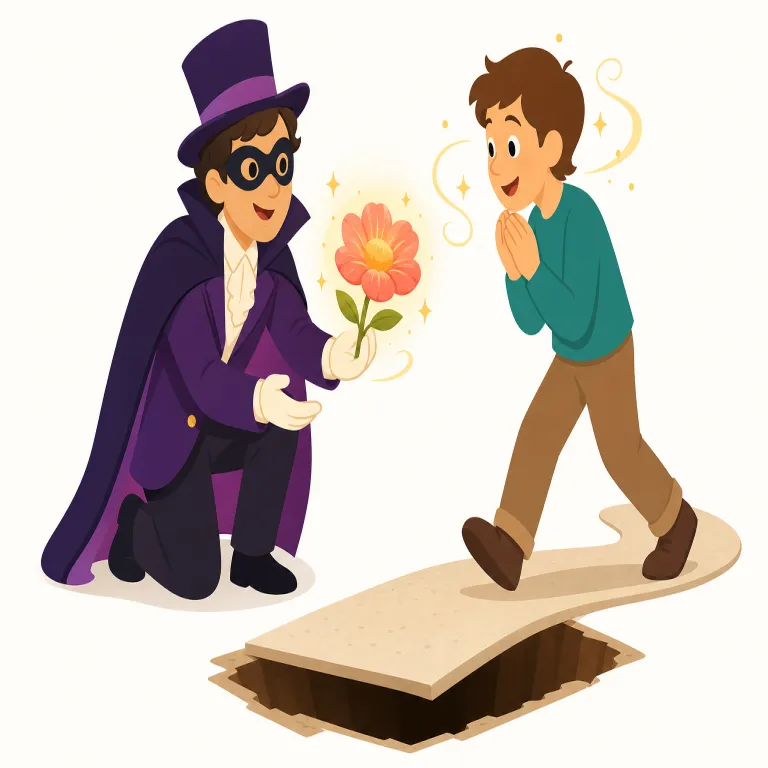
beguile は英検1級レベルの英単語で、「惑わす」という意味があります。発音記号は /bɪˈɡaɪl/ です。
惑わす。または騙す。誰かを誤解させたり幻惑させたりする。
To beguile someone means to attract, charm, or interest them in a way that affects their judgment or attention. The word can be positive or negative, because it may suggest pleasant charm or a kind of gentle deception.
beguile は「だます」だけでなく、「うっとりさせて判断を鈍らせる」が芯。deceive よりも charm や tempt の気配が混ざる語だと覚えると残りやすいです。美しい言葉、笑顔、都合のよい話で相手を引き込み、結果として惑わす場面を思い浮かべると定着します。be beguiled by flattering words のように by 以下に“人を迷わせる魅力”が来やすいのも手がかりです。
Think of `beguile` as a mix of `charm` and `deceive`. Someone does not trick you by force, but by sweet words, beauty, or attraction. The pattern `be beguiled by ...` is a useful way to fix it in memory.
Her charming words beguile people easily.
彼女の魅力的な言葉は人々を簡単に惑わす。
The magician used illusions to beguile the audience.
マジシャンのトリックは観客を惑わした。
She beguiled him with her intelligence and wit.
彼女は知性と機知で彼を惑わした。
文脈によって、次の意味でも使われます。
beguile the timeやbeguile the hoursの形で、退屈な時間を楽しく過ごす、または気を紛らわせることを表す。人を欺く意味ではなく、読書や会話などを時間の慰めにする文語的な用法である。
魅力や美しさ、巧みな話し方などによって人の心を引きつけ、楽しませたり夢中にさせたりする。必ずしも相手を欺くことを意味せず、人物・物語・音楽などが人を強く引きつける場合にも使われる。
beguile は be-「強める」+ guile「ずるさ・欺き」からできた語で、guile は古フランス語を経てゲルマン系語に由来します。核は「巧みに心をそらしてだます」で、単に欺くより「惑わす」の感じが強い語です。関連語は guile, guileless。
Beguile was formed from the prefix be- and guile, meaning "deceit" or "trickery." Guile came into English through Old French from a Germanic source. The meaning developed from simple deception to the softer idea of charming or distracting someone in a misleading way, and related words include guile and guileless.
この英単語をクイズで覚えよう