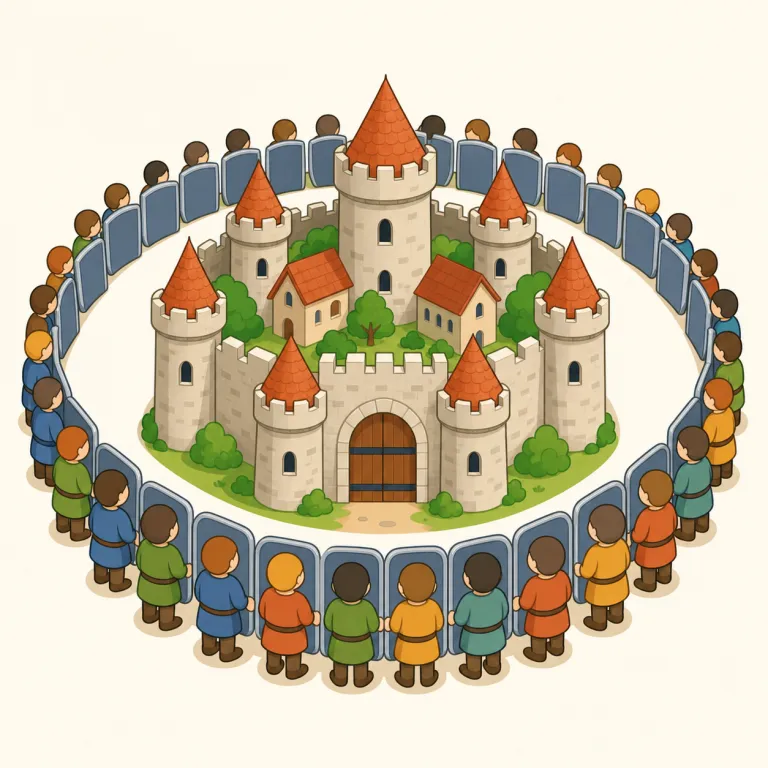
包囲する
解説 Definition
城や都市を軍隊で取り囲んで攻撃すること。転じて、要求や質問で人を圧倒すること。
To besiege means to surround a place, especially a city, with armed forces in order to attack it or stop people and supplies from entering or leaving. It can also be used more generally for being under heavy pressure from problems, questions, or criticism. The historical and military meaning is the main one.
覚え方のコツ Memory Tip
まず中核は siege「包囲・攻囲」。これに be- が付いて「ぐるりと取り囲んで siege する」と捉えると覚えやすいです。単なる surround よりも、逃げ場をなくして圧迫する感じが強い語。よく city / castle / fort を目的語に取り、比喩では be besieged by questions, requests, complaints の形で「質問攻め・要求攻めにされる」とも使われます。under siege も一緒に覚えると定着しやすいです。
Focus on the core word `siege`. `Besiege` means to put something under siege, so the whole word feels stronger than simple `surround`. Also remember common patterns like `besiege a city` and `be besieged by questions`.
例文
The army besieged the fortress for three months before it finally surrendered.
軍は3か月間その要塞を包囲し、ついに降伏させた。
Reporters besieged the politician with questions about the scandal.
記者たちはスキャンダルについてその政治家を質問攻めにした。
The medieval city was besieged by enemy forces who cut off all supply routes.
その中世の都市は敵軍に包囲され、すべての補給路を断たれた。
besiege の類義語・関連語
besiege の語源・成り立ち Etymology
besiegeはbe-+siegeから成り、siegeは古フランス語経由でラテン語 sedere「座る」にさかのぼります。もとは城の周りに座り込む感覚なので、包囲して相手を動けなくする意味になりました。siegeやsedentaryも同じ語根です。
Besiege is made from be- and siege. Siege came through Old French from Latin sedere, meaning "to sit," because the original image was of an army sitting around a town or castle. From that idea, the word developed the sense of surrounding and trapping an enemy. Related English words include siege and sedentary.
同じレベルの語彙をもっと
外部辞書で調べる
この英単語をクイズで覚えよう