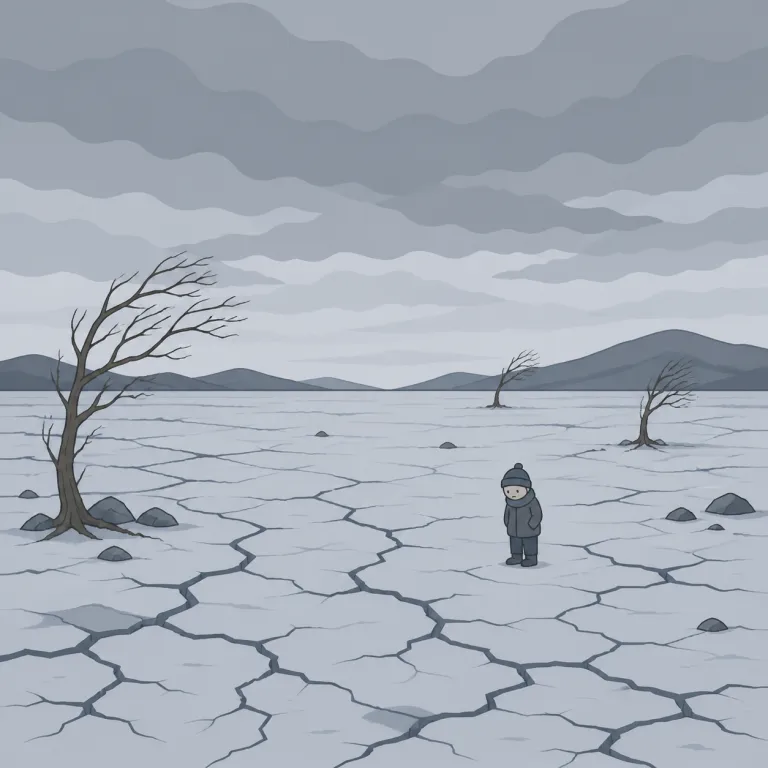
荒涼さ
解説 Definition
陰鬱さ、暗さ、または明るさの欠如の品質。暗く不幸な色合いまたは気分。
Bleakness is the quality of looking cold, empty, and without life, or of feeling hopeless and depressing. It can describe weather, landscapes, or emotional situations, and it gives a strong negative impression.
覚え方のコツ Memory Tip
まず bleak を一語で覚え、-ness が付くと「その性質・状態」になると押さえると bleakness はすぐ取れます。単なる dark の暗さより、寒い・空っぽ・希望が見えない感じが強い語です。bleak landscape, bleak winter, bleak future, a bleak outlook のような決まった組み合わせで覚えると定着しやすい。景色にも将来にも使え、grim より「厳しさ」よりも荒れた寂しさ、dismal より少し乾いて冷たい印象が出ます。
Learn `bleak` first, then add `-ness` for the state or quality: `bleakness`. It often goes with nouns like `landscape`, `winter`, `future`, and `outlook`, so remember those collocations. Compared with simple `dark`, this word feels colder, emptier, and more hopeless.
例文
The bleakness of the landscape matched her mood.
その景色の荒涼とした様子は、彼女の気分と重なっていました。
The bleakness of winter affected people's mental health.
冬の陰鬱さは人々の精神衛生に影響を与えました。
Despite the bleakness of the situation, hope remained.
厳しい状況にもかかわらず、希望は残っていました。
bleakness の類義語・関連語
派生語
bleakness の語源・成り立ち Etymology
bleakness は bleak「荒涼とした」に状態を表す -ness が付いた語で、bleak は古ノルド語 bleikr「青白い」に由来します。もともと色の薄さ・白さの語だったため、景色が色を失ったように寒々しい感覚から『荒涼さ』へ広がりました。bleach も同根です。
Bleakness is bleak with the noun suffix -ness. Bleak comes from Old Norse bleikr, meaning "pale" or "whitish," and it is related to English bleach. The idea seems to have shifted from paleness of color to a cold, empty, washed-out feeling. That is how it came to express emotional or physical desolation.
同じレベルの語彙をもっと
外部辞書で調べる
この英単語をクイズで覚えよう