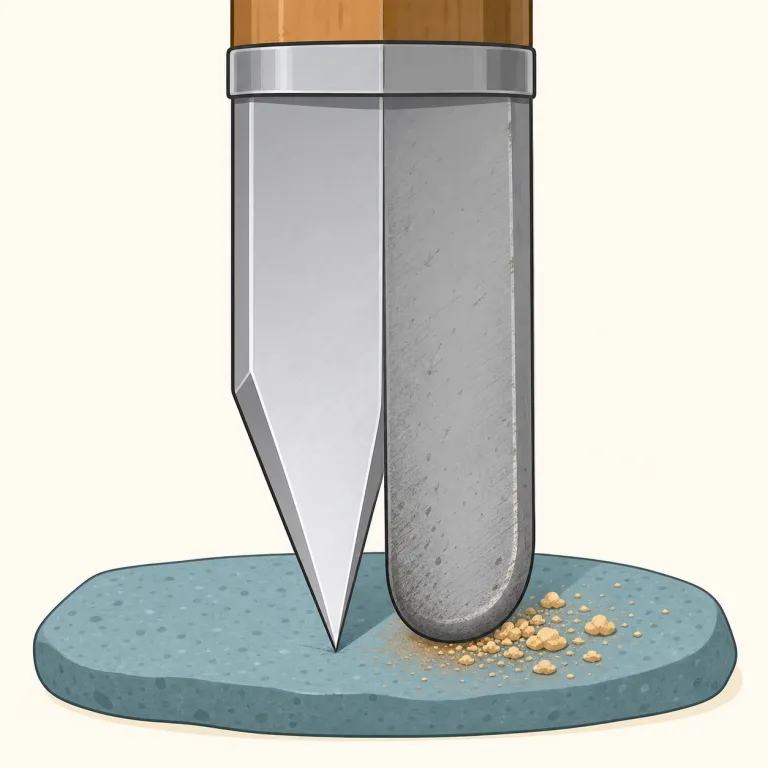
blunting
blunting はTOEIC 990・TOEFL 100・IELTS 7.5レベルの英単語で、「鈍くする」という意味があります。発音記号は /ˈblʌntɪŋ/ です。
鈍くする
解説 Definition
鋭さを減らす、または鈍くする行為。
Blunting is the process of making something less sharp, pointed, or strong. It can describe a physical change, like making a knife less sharp, or a less direct effect, like reducing an emotion, reaction, or impact. It is often used in both literal and figurative contexts.
覚え方のコツ Memory Tip
まず blunt を軸に覚えると整理しやすいです。blunt は sharp の反対で、刃先・感覚・表現などが『鋭くない』状態。blunting はそこからさらに『鋭さを落としていくこと』を表す -ing 形で、a blunting of pain なら痛みを鈍らせる、blunting the knife なら刃を鈍くする、という使い方。sharpening と対で置くと定着しやすく、dull も近い語ですが、blunt は“先端や切れ味が丸くなる”感じを意識すると区別しやすいです。
Start from `blunt`, the opposite of `sharp`. If something is blunting, it is becoming less sharp little by little. Remember it with the pair `sharpening` vs. `blunting`, especially for a knife, pain, or emotion.
例文
Blunting the blade made it safer.
刃を鈍くすることで、より安全になった。
Stress was blunting the effect of the treatment.
ストレスが治療の効果を鈍らせていた。
Blunting emotions can be unhealthy.
感情を鈍くすることは、心の健康に良くない場合がある。
blunting の類義語・関連語
類義語
blunting の語源・成り立ち Etymology
blunting は blunt「刃先の鈍い・鈍感な」の現在分詞です。blunt は中英語由来で、古ノルド語系の「目を閉じる・鈍る」に通じる語源が考えられており、鋭さが失われる感覚から「鈍くする/鈍くなる」の意味になりました。関連語は bluntly, bluntness です。
Blunting is the present participle of blunt. Blunt came into English in the Middle English period, probably from Scandinavian or related Germanic sources meaning dull or not sharp. Its meaning widened from a physical loss of sharpness to a more general idea of weakening force, feeling, or effect.
同じレベルの語彙をもっと
TOEIC 990の一覧へ →外部辞書で調べる
この英単語をクイズで覚えよう