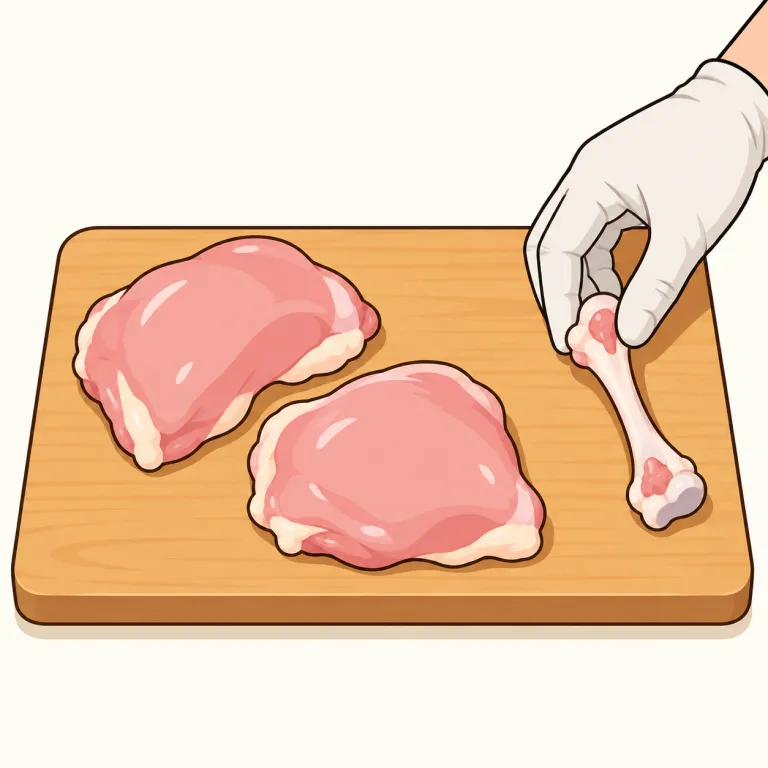
骨を抜いた;(複合語で)…な骨格の
解説 Definition
boned は、肉や魚などの「骨を抜いた、骨を取り除いた」を表す形容詞です。また、通常は修飾語を伴い、「特定の骨格を持つ」という意味でも使われます。
Boned can mean having had the bones removed, especially when describing meat or fish prepared for cooking. It can also mean having a particular kind of skeletal structure, but in this sense it normally appears with a modifier in expressions such as big-boned, heavy-boned, well-boned, or solidly boned.
使い方 Usage
- boned chicken のように食材を修飾すると、骨を取り除いてあることを表します。 When modifying food, as in boned chicken, boned means the bones have been removed.
- 骨格の用法では big-boned「骨格の大きい」、heavy-boned「骨太の」、well-boned「しっかりした骨格の」などと使います。 For skeletal structure, use combinations such as big-boned for a large frame, heavy-boned for thick bones, and well-boned for a sturdy frame.
覚え方のコツ Memory Tip
bone に -ed を付けた形で、語尾は /d/ と発音します。骨を抜いた鶏肉と、太い骨格の馬を思い浮かべ、食材か骨格かを周囲の語で見分けましょう。
Boned is bone plus -ed, with the ending pronounced /d/. Picture chicken with its bones removed and a horse with a sturdy frame. The surrounding words help distinguish food preparation from skeletal structure.
例文
The chef used boned chicken thighs for the dish.
料理人はその料理に骨を抜いた鶏もも肉を使いました。
The heavy-boned horse moved slowly but powerfully.
その骨太の馬はゆっくりと、しかし力強く進みました。
This breed is known for its broad chest and solidly boned legs.
この品種は広い胸としっかりした骨格の脚で知られています。
boned の類義語・関連語
boned の語源・成り立ち Etymology
boned は bone と -ed から成ります。bone は古英語 bān「骨」に由来します。動詞 bone の過去分詞では「骨を取り除いた」を表し、形容詞を作る -ed が「…を備えた」の意味を持つ場合は、heavy-boned などの複合語で「特定の骨格を持つ」ことを表します。
Boned is built from bone and the suffix -ed. Bone comes from Old English bān, while adjectival -ed can mean “provided with” or “having,” as in winged. In combinations such as heavy-boned, the word literally characterizes the kind of bones or skeletal frame possessed. The same spelling also serves as the past tense and past participle of the verb bone, including its separate sense “remove the bones from.”
同じレベルの語彙をもっと
外部辞書で調べる
この英単語をクイズで覚えよう