評判向上、イメージアップ
noun 名詞比喩的に、人物・企業・ブランドなどの評判や印象を意図的に良くすることを指す。image burnishing や reputation burnishing の形で使われ、表面的な宣伝による美化をほのめかす場合もある。
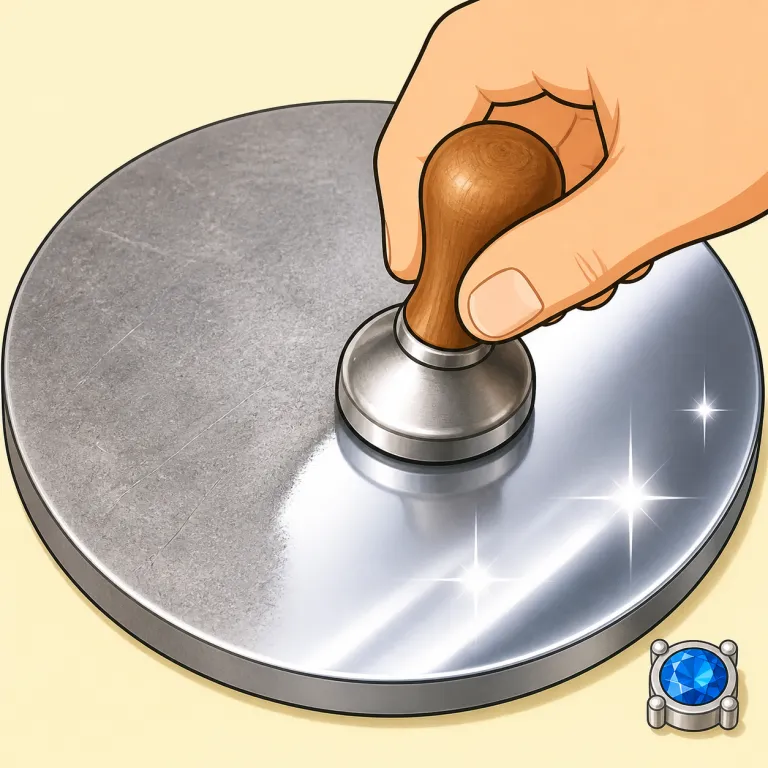
表面をこすったり押しならしたりして、滑らかで光沢のある状態に仕上げる工程です。金属や宝石などの加工で、つやを出す仕上げを指します。
Burnishing is the act of polishing a surface until it becomes smooth and shiny. It is used for metal, wood, leather, and similar materials in art, craft, or manufacturing. The word can also be used figuratively for improving someone's image or reputation.
まず動詞 burnish を核に覚えるのが近道。名詞形の burnishing は「磨いてつやを出すこと/その工程」。polish も「磨く」だが、burnish は特に表面をこすって光沢を強く引き出す感じがある。metal, silver, jewelry など光る素材と結びつけると定着しやすい。a burnished surface, burnishing tools のように、加工・仕上げの文脈で出やすい。語尾 -ing でもここでは進行形ではなく作業名の名詞になっている点にも注意。
Link it to the verb `burnish`, then notice that `burnishing` is the activity name. It is close to `polishing`, but it suggests rubbing a surface until it gets a strong shine. Think of metal, silver, or jewelry to make the image stick.
The craftsman used burnishing to polish the metal.
職人は磨き上げによって金属につやを出しました。
Burnishing techniques create a mirror-like finish.
磨き上げの技法は鏡のような仕上げを作り出します。
Professional jewelers employ burnishing for gem settings.
宝石職人は宝石の留め付けに磨き上げを用います。
文脈によって、次の意味でも使われます。
比喩的に、人物・企業・ブランドなどの評判や印象を意図的に良くすることを指す。image burnishing や reputation burnishing の形で使われ、表面的な宣伝による美化をほのめかす場合もある。
burnishing は burnish「磨いて光らせる」からで、古フランス語 burnir / brunir を経て英語に入った。背景には brun「褐色・つや」があり、金属をこすって光沢を出す感覚から「磨き上げ」になった。関連語は burnish, brown。
Burnishing comes from burnish, which English borrowed from Old French burnir or brunir. It is connected with brun, meaning "brown," and may have first suggested the polished look of metal or armor. From the idea of rubbing a surface until it shines, the word developed the sense of polishing to a gloss.
この英単語をクイズで覚えよう