軸受け / ブッシュ
解説 Definition
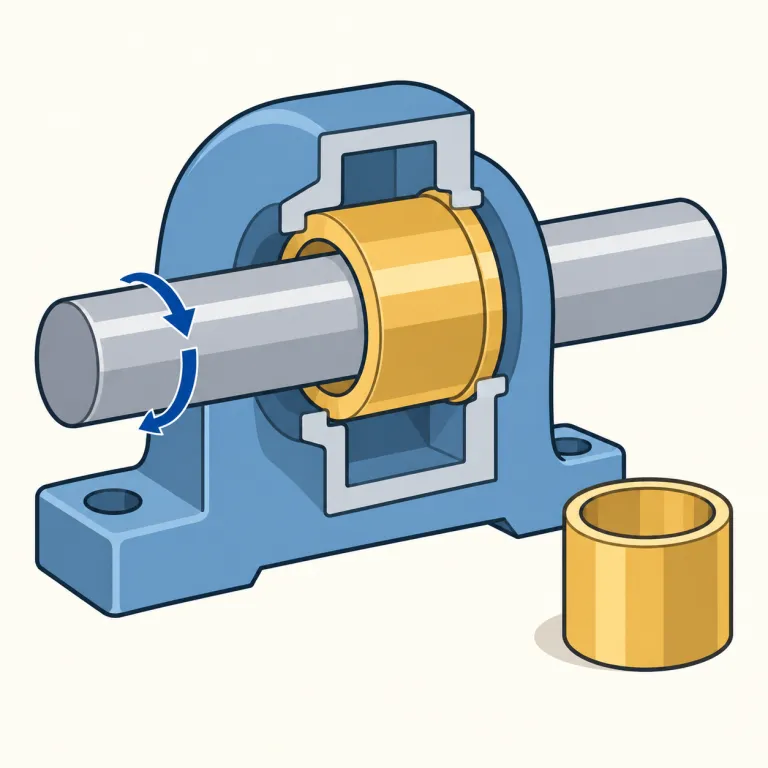
bushing は、機械の軸の周囲や穴の内側にはめる、通常は筒状の部品「軸受け・ブッシュ」です。動く部品を支えたり導いたりし、部品間のすき間の調整や摩耗の軽減に使われます。
A bushing is a usually cylindrical mechanical component fitted around a shaft or inside a hole. It supports or guides moving parts, adjusts the clearance between components, and can reduce wear, vibration, or electrical contact.
使い方 Usage
覚え方のコツ Memory Tip
軸と機械本体の間にはまる小さな筒を思い浮かべましょう。bush「ブッシュを取り付ける」と形を結び付けられますが、ここでは部品そのものの名前です。
Picture a small sleeve fitted between a shaft and the machine around it. You can connect the form with bush, meaning to fit a bushing, but here it is the name of the component itself.
例文
The mechanic replaced the worn bushing.
整備士は摩耗したブッシュを交換しました。
A small bushing supports the rotating shaft.
小さな軸受けが回転する軸を支えています。
bushing の類義語・関連語
bushing の語源・成り立ち Etymology
オランダ語 bus またはドイツ語 Büchse(箱・筒)に接尾辞 -ing が付いた機械用語。軸と軸受けの間に挿入する円筒状の部品を指す。「筒状の覆い」が原義で、摩耗防止や絶縁の役割を持つ。関連語:bush(軸受け筒)、box(箱、同系統)。
The mechanical term bushing is formed from bush, an engineering word for a cylindrical lining or sleeve, with -ing. Bush in this sense is associated with Dutch bus and German Büchse, words referring to a container, tube, or casing. The historical image of a hollow enclosure fits the modern component, which surrounds a shaft or lines a hole. Box is sometimes compared as a more distant related form.
同じレベルの語彙をもっと
外部辞書で調べる
この英単語をクイズで覚えよう