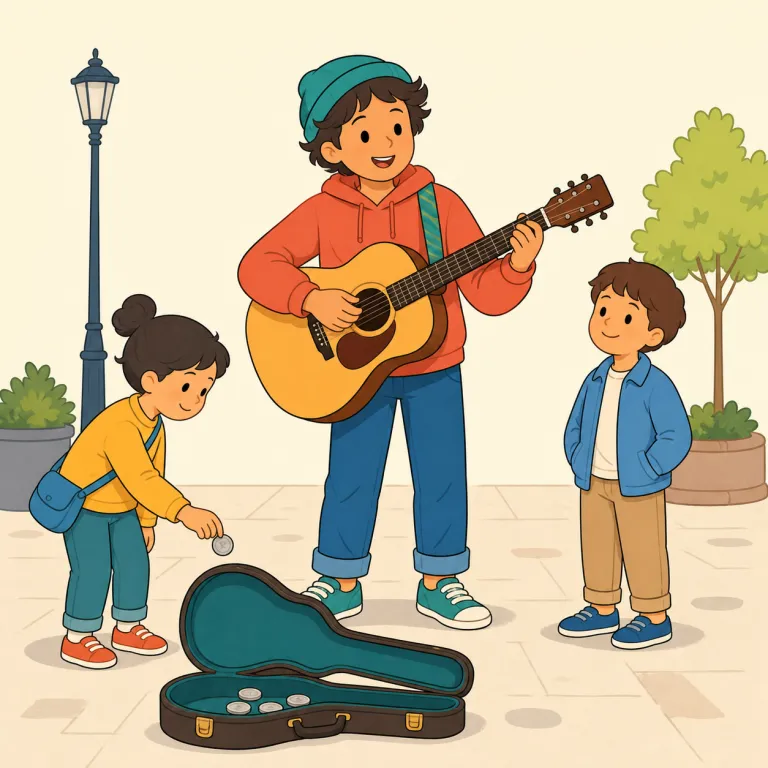
大道芸
解説 Definition
路上や公共の場で音楽や芸を披露してお金を得ること。ストリートパフォーマンス。
Busking is the activity of performing music, magic, or other entertainment in public places, usually to get money from people who are watching. It often happens on streets, in stations, or in parks. The word is mainly used for informal public performance.
覚え方のコツ Memory Tip
まず busker が「大道芸人」、busking がその行為だとセットで覚えると定着しやすいです。語尾の -ing は「していること・行為」を表すので、performing が「演じること」なのと同じ感覚で取れます。意味の核は「street + perform + get money」。店や劇場の正式な公演ではなく、駅前や広場など公共の場で、通行人相手に歌う・弾く・芸を見せてチップをもらう場面を思い浮かべるとよいです。street performance より口語的で、稼ぎのニュアンスが少し入る点も区別ポイントです。
Learn `busker` and `busking` together: a `busker` is the person, and `busking` is the activity. The `-ing` ending helps, like `performing` or `singing`. Picture someone playing music in a station or square and getting coins from people passing by.
例文
He earned a living by busking with his guitar at the subway station.
彼は地下鉄の駅でギターを弾いて大道芸をし、生計を立てていた。
Busking is a popular way for young musicians to gain exposure and practice performing.
大道芸は若いミュージシャンが注目を集め、演奏の練習をする人気の方法だ。
The city requires street musicians to get a permit before busking in public parks and plazas.
市は、路上ミュージシャンが公園や広場で大道芸をする際、事前に許可証を取得するよう義務づけている。
busking の類義語・関連語
busking の語源・成り立ち Etymology
buskingは19世紀英語で、busk「街で芸をして稼ぐ」から。buskは古仏語・伊語・西語buscar「探し回る」と結びつく語源説があり、「客を求めて歩く」感覚が大道芸の意味になった。関連語はbusker。
Busking comes from `busk`, recorded in 19th-century English for earning money by performing in the street. The verb is often linked to forms such as Spanish or Italian `buscar`, meaning "to seek" or "to look for." The idea seems to be going around in search of customers or an audience, which fits street performance well. The related English word `busker` developed from the same source.
同じレベルの語彙をもっと
外部辞書で調べる
この英単語をクイズで覚えよう