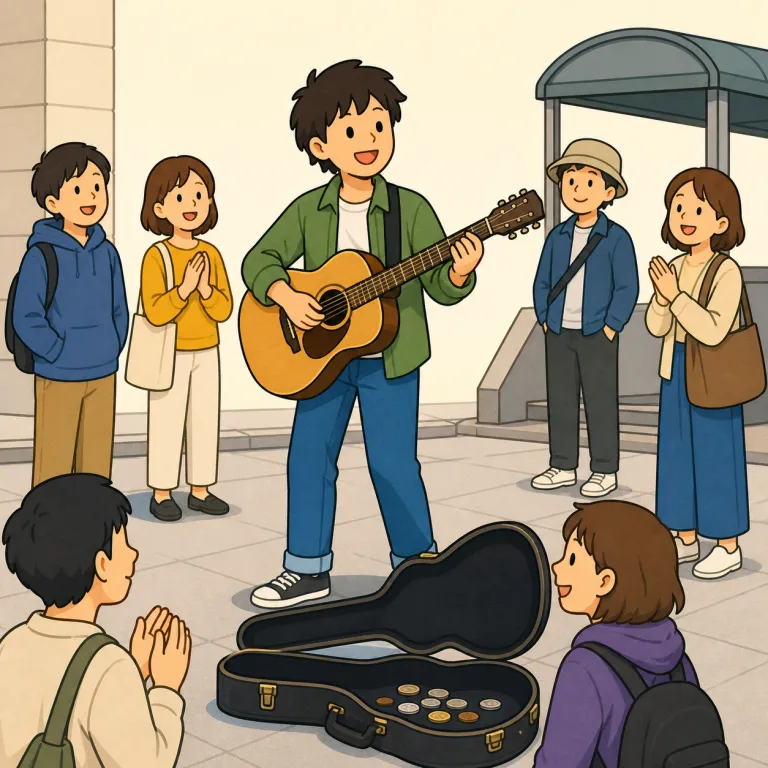
路上で演奏する、大道芸をする
解説 Definition
街頭や駅前などの公共の場所で、通行人の前で音楽を演奏したり芸を見せたりして投げ銭を得ることを表す動詞。主に歌手や演奏家について使われるが、手品や曲芸などの路上パフォーマンスにも広く用いられる。
To busk means to perform music or other entertainment in a public place, usually to get money from people passing by. It is commonly used for street performers in cities, stations, or tourist areas. The activity is often informal, though local rules may control it.
覚え方のコツ Memory Tip
まず busker(大道芸人), busking(路上演奏)と語族でまとめると定着しやすい語です。perform や play が単に「演奏する」なのに対し、busk は「駅前・街角・地下鉄の通路など公共の場で、人前に立って、しばしば投げ銭をもらいながら演じる」という場面つきの動詞。『外で、その場の通行人に向けて見せているなら busk』と覚えるとよいです。正式なコンサートにはふつう使わない、という対比まで入れると記憶に残ります。
It helps to learn the word family: `busk`, `busker`, `busking`. Unlike just `play` or `perform`, `busk` gives a clear scene: playing or performing in a public place for passers-by. Think of streets, stations, and subway tunnels, not a formal concert hall.
例文
Street musicians busk in the city center to earn extra money.
路上音楽家たちは副収入を得るために街の中心部で演奏する。
She decided to busk with her guitar on weekends.
彼女は週末にギターを持って路上演奏をすることにした。
They busked outside the station and drew a cheerful crowd.
彼らは駅前で大道芸をして、楽しげな人だかりを集めた。
busk の類義語・関連語
busk の語源・成り立ち Etymology
busk は「大道で芸をして稼ぐ」という語で、スペイン語 buscar「探す」またはその近縁語にさかのぼるとされます。busker や busking も同根で、もともと「稼ぎ口を探す」が核なので、街角で客や投げ銭を求める姿から「大道芸」になったと見えます。
Busk is usually linked to Spanish buscar, "to seek" or "to look for," or a closely related Romance source. The original idea was likely seeking a living or seeking chances to earn money. From that, it developed into the sense of performing in public places for coins, and busker and busking come from the same root.
同じレベルの語彙をもっと
外部辞書で調べる
この英単語をクイズで覚えよう