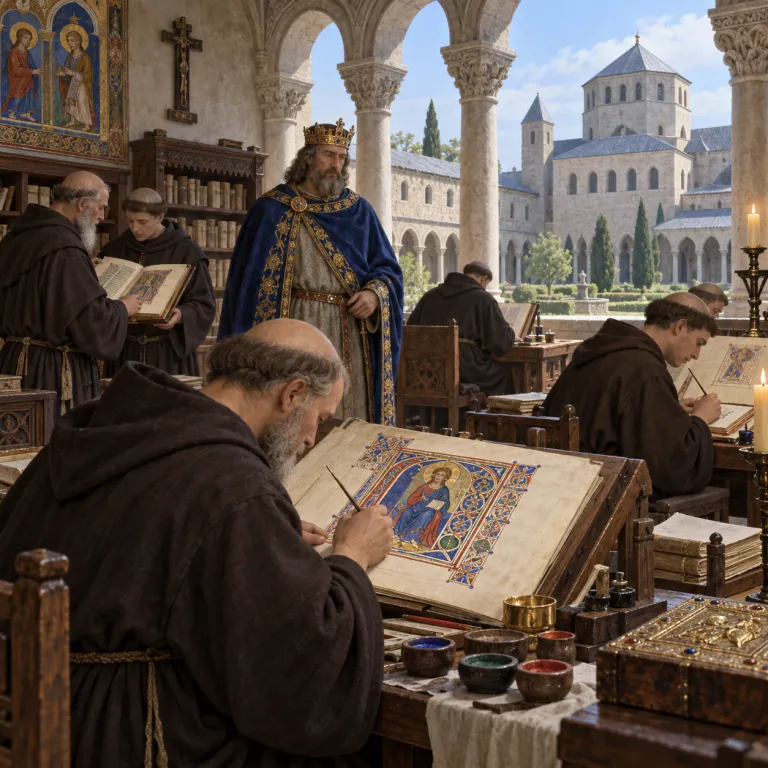
カロリング朝の
解説 Definition
八世紀から九世紀にかけて西ヨーロッパを支配したカロリング朝、またはその時代の文化、政治、芸術、建築などに関することを表す形容詞。特にシャルルマーニュとその後継者の時代に結び付けて用いられる。
Carolingian means related to Charlemagne, his family, or the dynasty and culture connected with them in early medieval Europe. It is often used in history, especially for art, politics, religion, and learning from that period. The word is mainly academic or historical.
覚え方のコツ Memory Tip
歴史用語として固有名詞の形で覚えるのが近道。語尾の -ian は Italian, Victorian などと同じで「〜に属する/〜時代の」という形容詞を作るので、Carolingian も「カロリング家・その時代の」と取れる。単独で日常語になることは少なく、Carolingian dynasty, Carolingian Renaissance, Carolingian art のように王朝・文化史の文脈でまとまって出る。Charlemagne(シャルルマーニュ)周辺の時代ラベルだと結びつけると忘れにくい。
Notice the ending `-ian`, as in `Victorian` or `Italian`, which often means `related to`. So `Carolingian` means related to the Carolingian rulers or period. It is best remembered in fixed history phrases like `Carolingian dynasty` or `Carolingian Renaissance`, especially with Charlemagne.
例文
The Carolingian Renaissance marked a period of cultural and intellectual revival in medieval Europe.
カロリング朝ルネサンスは、中世ヨーロッパにおける文化的・知的復興の時期を画した。
Charlemagne was the most famous ruler of the Carolingian dynasty.
シャルルマーニュはカロリング朝で最も有名な統治者だった。
Carolingian manuscripts and illuminated books are treasured artifacts from the medieval period.
カロリング朝の写本や装飾写本は、中世の貴重な遺物である。
carolingian の類義語・関連語
類義語
carolingian の語源・成り立ち Etymology
Carolingian は中世ラテン語 Carolingi『カール家の人々』からで、さらに Carolus『カール/シャルル』にさかのぼります。語尾 -ian は『〜に属する』で、もともと『シャルル家の王朝』という字義です。名の根にはゲルマン語の karl『男・自由民』があり、関連語に Charles, Carl がある。
Carolingian comes from Medieval Latin Carolingi, meaning the family or followers of Carolus, the Latin form of Charles or Karl. The ending -ian means “belonging to” or “connected with.” At a deeper level, the name goes back to a Germanic root karl, meaning “man” or “free man.” Related names include Charles and Carl.
同じレベルの語彙をもっと
外部辞書で調べる
この英単語をクイズで覚えよう