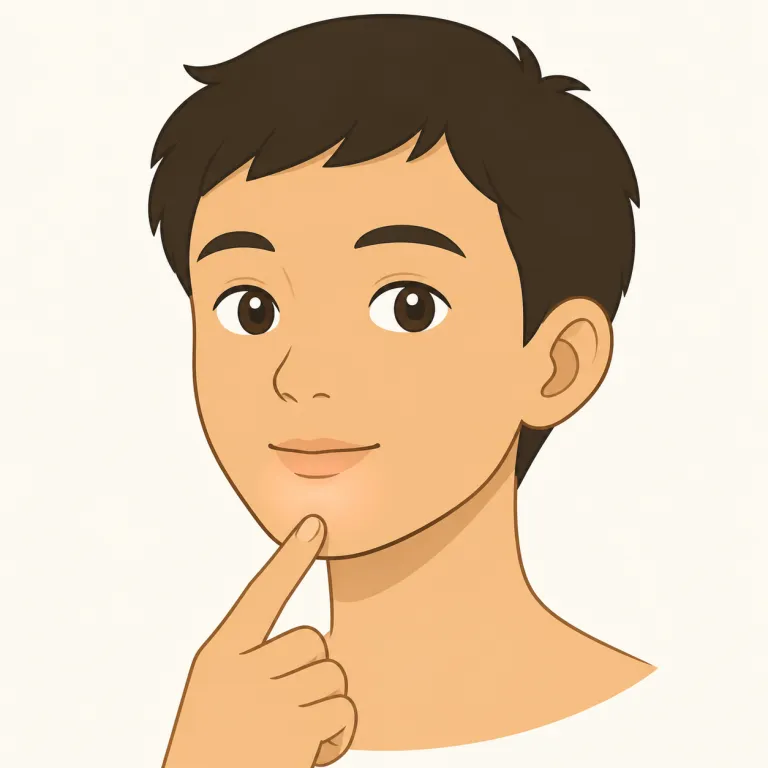
あご
解説 Definition
顔の下部で、下唇の下に突き出た部分を指す語。日本語の「顎」全体よりも、英語では特に前に出たあご先の部分を表すことが多い。顔立ちの印象を述べたり、あごを手にのせて考えるしぐさを言ったりするときによく使う。
The chin is the part of the face below the mouth, at the bottom of the jaw. It is a body part often mentioned in descriptions of appearance, movement, or injury. In some expressions, it can also suggest confidence or direction of the head.
覚え方のコツ Memory Tip
chin は「顔の前に見える、突き出たあご先」と押さえると覚えやすいです。骨格全体や横のラインまで含みやすい jaw より範囲が狭く、lip の下で neck の上にある先端部分を指します。rest your chin on your hand, a pointed chin, double chin などの形でよく出るので、見た目描写やしぐさと結びつけると定着しやすいです。特に jaw と混同しやすいので、「噛む骨は jaw、前に出た先は chin」という対比で整理すると忘れにくくなります。
Think of the `chin` as the front point under your mouth. A useful contrast is `jaw` versus `chin`: the `jaw` is the larger bone area, but the `chin` is the small front part. Phrases like `rest your chin on your hand`, `pointed chin`, and `double chin` make it easier to remember.
例文
He has a long chin.
彼はあごが長いです。
The baby was drooling and touching his chin.
赤ちゃんはよだれを垂らしながら、自分のあごに触っていた。
She put her chin on her hand and thought.
彼女はあごを手にのせて考えました。
chin の語源・成り立ち Etymology
chin は古英語 cinn に由来し、さらにゲルマン祖語 *kinnuz にさかのぼる、非常に古い身体語です。口の下の基本部位を指す日常語で、短い形のまま残ったのは古くから頻繁に使われてきたためだとわかります。関連する同根語にドイツ語 Kinn、オランダ語 kin があります。
"Chin" comes from Old English "cinn" and goes back to Proto-Germanic "*kinnuz." It is a very old body-part word, which helps explain why its form stayed short and basic. Related words appear in other Germanic languages, such as German "Kinn" and Dutch "kin."
同じレベルの語彙をもっと
外部辞書で調べる
この英単語をクイズで覚えよう