亜塩素酸イオン、亜塩素酸塩
noun 名詞化学では、亜塩素酸イオン ClO₂⁻、またはそれを含む塩を指す。鉱物の緑泥石とは別語義で、sodium chlorite のように化合物名の一部として使われ、漂白や消毒の文脈に現れる。
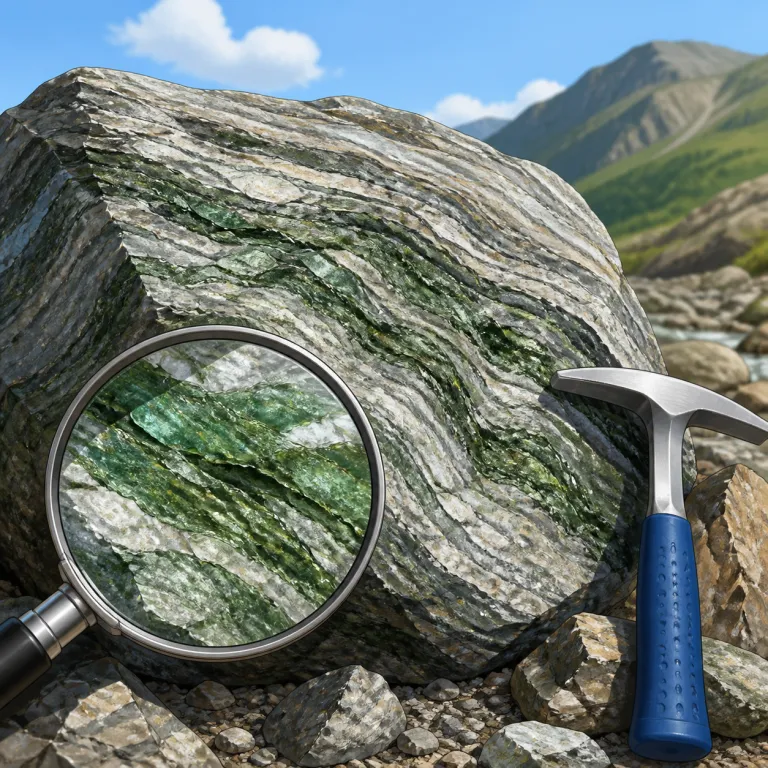
層状珪酸塩鉱物の一種で、緑色から緑褐色をしています。変成岩に特に多く含まれ、地質学の研究に重要な役割を果たします。
Chlorite is a green mineral commonly found in some rocks. It forms under certain pressure and temperature conditions, so it is often discussed in geology. The word usually refers to the mineral group, not a general green substance.
chlor- は chlorine や chlorophyll に見える形で、「緑っぽさ」を連想できる部分。-ite は graphite, calcite など鉱物名でよく出る語尾なので、「緑色系の見た目をもつ鉱物」とまとめて覚えると残りやすい。単独では日常語ではないので、地質・岩石の文脈、とくに metamorphic rock(変成岩)で出やすい語として場面ごと覚えると定着しやすい。つづりは chloride(塩化物)と混同しやすいので、chlorite は鉱物名の -ite で終わると意識する。
Use the first part `chlor-` to think of green words like `chlorophyll`. Then notice `-ite`, a common ending in mineral names such as `calcite` or `graphite`. That gives you a good memory pattern: a green-related mineral word, and not `chloride`, which is a different spelling and type of word.
Chlorite is commonly found in metamorphic rocks.
緑泥石は変成岩によく見られる。
The greenish color of chlorite gives rocks their distinctive hue.
緑泥石の緑色は岩に独特の色合いを与える。
Geologists study chlorite to infer the conditions under which a rock formed.
地質学者は、岩石が形成された条件を推定するために緑泥石を調べる。
文脈によって、次の意味でも使われます。
化学では、亜塩素酸イオン ClO₂⁻、またはそれを含む塩を指す。鉱物の緑泥石とは別語義で、sodium chlorite のように化合物名の一部として使われ、漂白や消毒の文脈に現れる。
chlorite は古代ギリシャ語 chloritis にさかのぼり、語根 chlor- は「淡い緑」を表します。-ite は鉱物名によく付く語尾で、chlorine や chlorophyll も同じ色の語根を共有し、緑泥石がその見た目の色から名づけられたとわかる語です。
Chlorite goes back to Greek chloritis, from chloros, meaning pale green or greenish-yellow. The ending -ite is common in mineral names. It was named from its color, and the same root appears in chlorine and chlorophyll. Over time, the color word became the name of the mineral itself.
この英単語をクイズで覚えよう