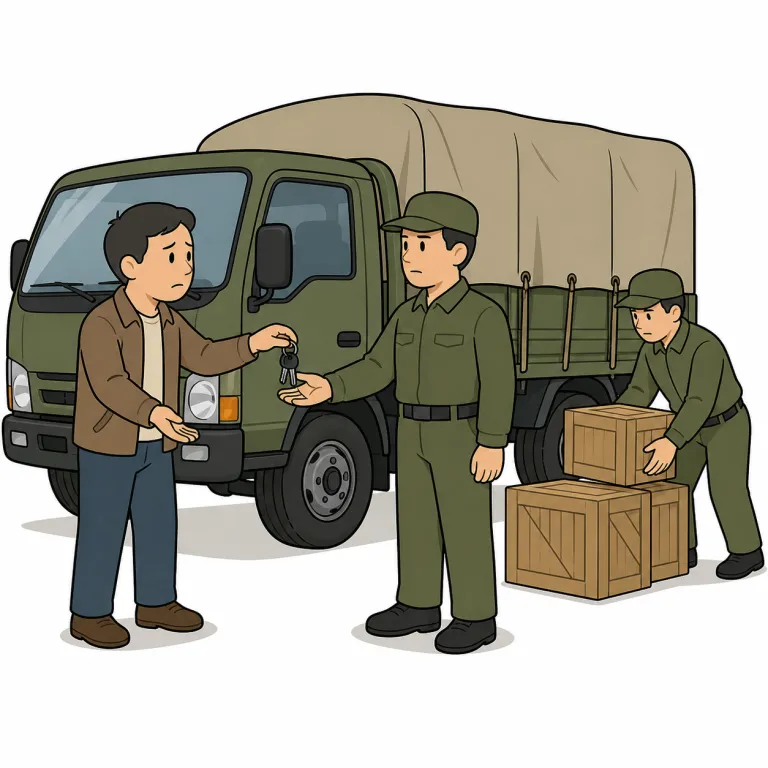
徴発する
解説 Definition
軍隊や政府などが、非常時や公的な必要を理由に、民間の物資・車両・建物などを所有者の意思にかかわらず取り上げて使用することを指す。比喩的には、他人の物や場所を半ば強引に使う意味でも用いられる。
To commandeer means to take control of something, often by force or by official authority. It can be used for vehicles, property, or even a situation or discussion. The word usually suggests that the owner or original user did not agree.
覚え方のコツ Memory Tip
核は command。まず「命令する」が見えれば、commandeer は「命令権を背景に、その物をこちらの管理下に置く」とつなげると覚えやすいです。よくある対象は vehicle, ship, building などで、軍や政府が非常時に使う語。steal のような盗みでも、borrow のような一時的な借用でもなく、「公的・強引に取り上げて使う」感じが中心。比喩でも、誰かの席・場・会話を半ば勝手に使う場面で使えます。
The core is `command`. If someone has the power to command, they can also force something into their use. That is the memory link for `commandeer`: not simple stealing, but taking control by authority or force. It is common with things like `ships`, `vehicles`, or `buildings`.
例文
The general had the authority to commandeer supplies for the troops.
その将軍には部隊のために物資を徴発する権限があった。
They were forced to commandeer horses for the journey.
彼らは旅のために馬を徴発せざるを得なかった。
The military can commandeer resources during emergencies.
軍は緊急時に資源を徴発できる。
commandeer の類義語・関連語
commandeer の語源・成り立ち Etymology
commandeerはオランダ語 kommandeeren を経て、フランス語 commander、俗ラテン語 commandare に由来する。com-「共に・強意」+ mandare「命じる」で、「命令して出させる」感覚がそのまま「徴発する」につながる。関連語は command、mandate。
Commandeer came into English through Dutch kommandeeren, from French commander and ultimately from Late Latin commandare. The Latin parts are com-, an intensive prefix, and mandare, "to entrust" or "to order." The sense developed from giving an order to making someone hand something over by authority; related words include command and mandate.
同じレベルの語彙をもっと
外部辞書で調べる
この英単語をクイズで覚えよう