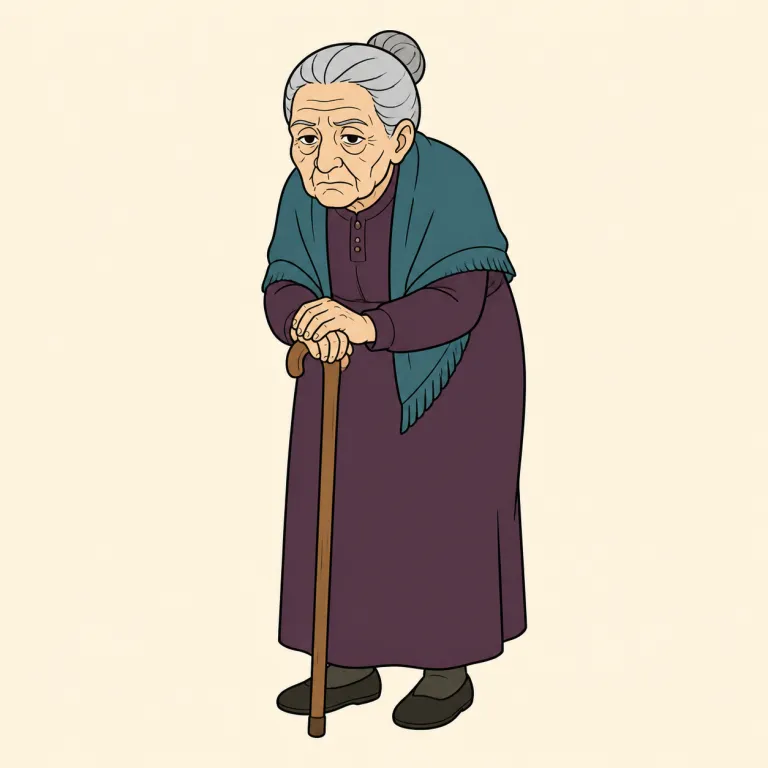
老婆
解説 Definition
老いぼれた、またはしわくちゃな女性を指す言葉。文学作品や童話で年配の女性キャラクターを描写する際に使われることが多い。
A crone is an old woman, especially one shown as ugly, unpleasant, or strange in stories and traditional descriptions. The word is often used in fairy tales, myths, or literary writing, and it can sound insulting in real life.
覚え方のコツ Memory Tip
crone は neutral な old woman ではなく、童話やダークな物語で出る「気味の悪い老婆・意地悪そうな老女」を描く語。elderly woman や old lady の代わりに日常で使う語ではなく、かなり否定的。witch や hag に近い空気、crooked nose, bent back, muttering などの描写とセットで覚えると残る。単に『年を取った女性』ではなく『不気味さまで含むキャラ語』と押さえると迷いにくい。
Remember `crone` as a story word, not a neutral everyday word like `old woman`. It often appears with dark fairy-tale images: a bent back, a sharp face, muttering, maybe even witch-like. Keep it close to `hag` in tone, so you remember the negative feeling.
例文
The crone in the fairy tale possessed magical powers.
童話の老婆は魔力を持っていた。
The crone lived alone in a cottage deep in the forest.
その老婆は森の奥深くの小屋に一人で住んでいた。
In the legend, a crone granted three wishes to the hero.
伝説では、老婆が英雄の3つの願いをかなえた。
crone の類義語・関連語
類義語
紛らわしい語
crone の語源・成り立ち Etymology
crone は中英語に入り、英仏語 carogne、古仏語 charogne を経て、俗ラテン語 caronia「死肉・死骸」にさかのぼります。もとは「死肉」が罵り語化し、「やせ衰えた老羊」から「老婆」へ意味が移った語です。関連語は carrion, carnal。
Crone entered English through Anglo-French and Old French forms, and it goes back to Vulgar Latin caronia, meaning "dead flesh" or "carcass." The word first developed as an insult, then was used for a thin, worn-out old ewe, and later for an old woman. Its history shows a strong negative shift in meaning. A related English word is carrion.
同じレベルの英単語をもっと
外部辞書で調べる
この単語を英単語クイズで覚えよう