自信や評判を傷つける
verb 動詞自信、評判、成功の見込みなどを弱めたり傷つけたりする比喩的な用法。denting confidenceやdenting someone's reputationのように、打撃によって勢いや評価が低下することを表す。
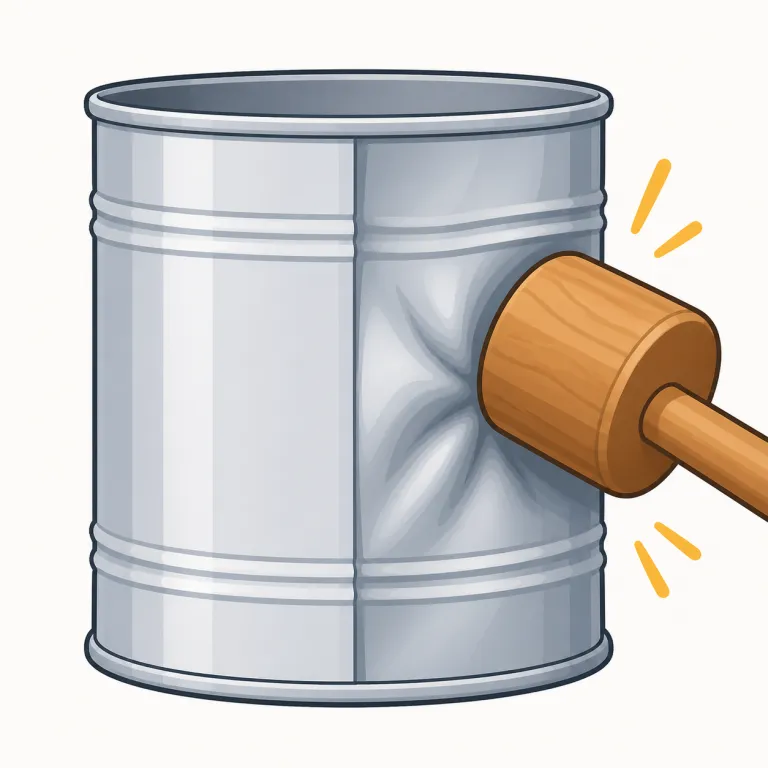
denting はTOEIC 990・TOEFL 100・IELTS 7.5レベルの英単語で、「へこませる」という意味があります。発音記号は /ˈdɛntɪŋ/ です。
物体の表面にへこみや凹みを作ること。衝撃によって損傷を与えることを指す。
Denting means making a hollow mark or slight damage on the surface of something hard, usually metal. It can also be used more figuratively for causing small damage to confidence, reputation, or progress.
まず基本語の dent を「車や金属の表面にできるへこみ」とセットで覚えると、denting はその動作版だと取りやすいです。-ing が付くので「へこませている」「へこみを作ること」という像が出せます。break のように壊し切る感じではなく、硬い物の表面がぶつかって少しつぶれるイメージ。car door, bumper, metal などとの相性がよく、damage よりも“へこみが見える”具体性が強い語です。
First remember the noun `dent`, the small inward mark on metal like a car door. Then `denting` is simply making that kind of mark. It is more specific than `damage`, because you can almost see the surface pushed in.
Denting the metal was easy with a hammer.
ハンマーでその金属にへこみをつけるのは簡単だった。
The accident ended up denting several cars in the parking lot.
その事故で駐車場の複数の車にへこみができた。
Even small impacts can start denting the surface.
わずかな衝撃でも表面にへこみが生じ始める可能性がある。
文脈によって、次の意味でも使われます。
自信、評判、成功の見込みなどを弱めたり傷つけたりする比喩的な用法。denting confidenceやdenting someone's reputationのように、打撃によって勢いや評価が低下することを表す。
denting は dent+-ing で、「歯のような刻みをつける」がもとの感覚です。dent はフランス語経由でラテン語 dens, dent-「歯」に由来し、dental や indent も同根だから、へこみが「歯形」のように見えることから表面のくぼみを表すようになりました。
"Denting" comes from "dent," which entered English through French from Latin dens or dent-, meaning "tooth." The earliest image is of a tooth-like mark or notch pressed into a surface. From that, the word developed the wider sense of making a hollow or depression. Related words include "dental" and "indent."
この英単語をクイズで覚えよう