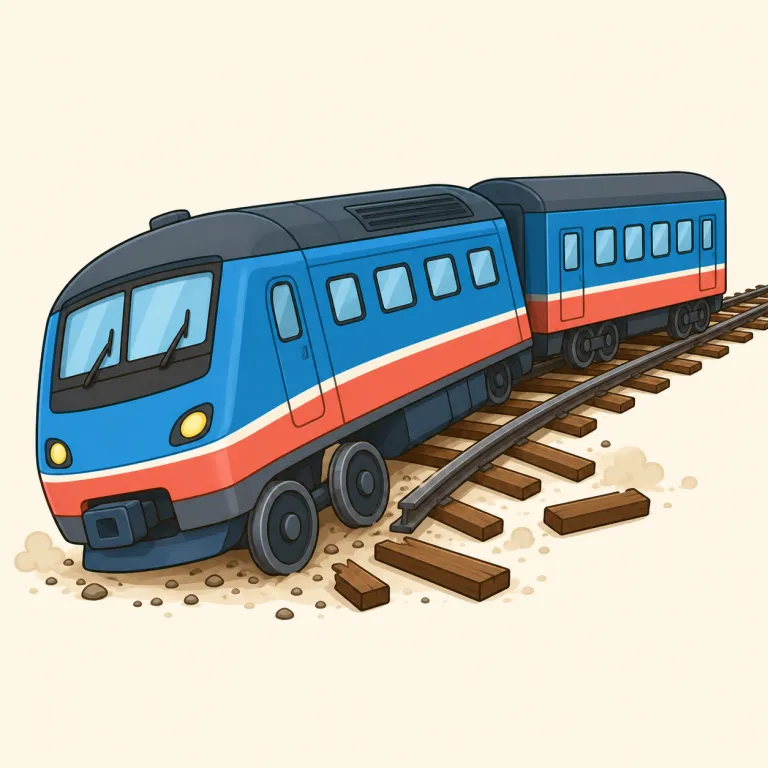
脱線
解説 Definition
脱線とは、列車や車両が線路から外れて走行する状態です。本来の路線を外れるという意味で、比喩的には計画や議論が元の方向から逸脱することも指します。
Derailment is the accident of a train leaving the tracks. It can also mean a process, plan, or discussion being seriously interrupted or forced off its intended path.
覚え方のコツ Memory Tip
rail が「レール」、derail が「レールから外す」、-ment が「出来事・結果」を作る名詞語尾、と分けて見ると derailment は「脱線という出来事」とまとまって覚えやすいです。まず train derailment という文字どおりの事故を核に置き、そこから the derailment of talks や the project’s derailment のように「交渉・計画が本筋から外れる」比喩へ広げると定着します。delay のような単なる遅れではなく、方向自体がずれる語だと意識すると混同しにくくなります。
Break it into `rail`, `derail`, and `-ment`. A train can `derail` by leaving the rail, and `derailment` is the event or result. Start with `train derailment`, then extend it to talks or plans that go off track. This helps you remember it is more than a simple delay.
例文
The train derailment caused a major accident.
電車の脱線は大事故を引き起こした。
The conversation derailed when political topics came up.
政治的なトピックが出てきた時、会話は脱線した。
The railway company investigated the derailment thoroughly.
鉄道会社は脱線を徹底的に調査した。
derailment の類義語・関連語
derailment の語源・成り立ち Etymology
derailment は derail(脱線させる)+名詞語尾 -ment で、derail はフランス語 de-(外へ)+ rail(レール)から来ています。文字どおり「レールから外れること」が原義なので、計画や議論の脱線にも自然に広がりました。関連語に rail, derail があります。
Built from derail plus the noun ending -ment. Derail came from French, with de- meaning "off" or "away" and rail meaning "rail." The literal sense was going off the rails, and this later spread naturally to plans, talks, or processes that leave their proper course. Related words include rail and derail.
同じレベルの英単語をもっと
外部辞書で調べる
この単語を英単語クイズで覚えよう