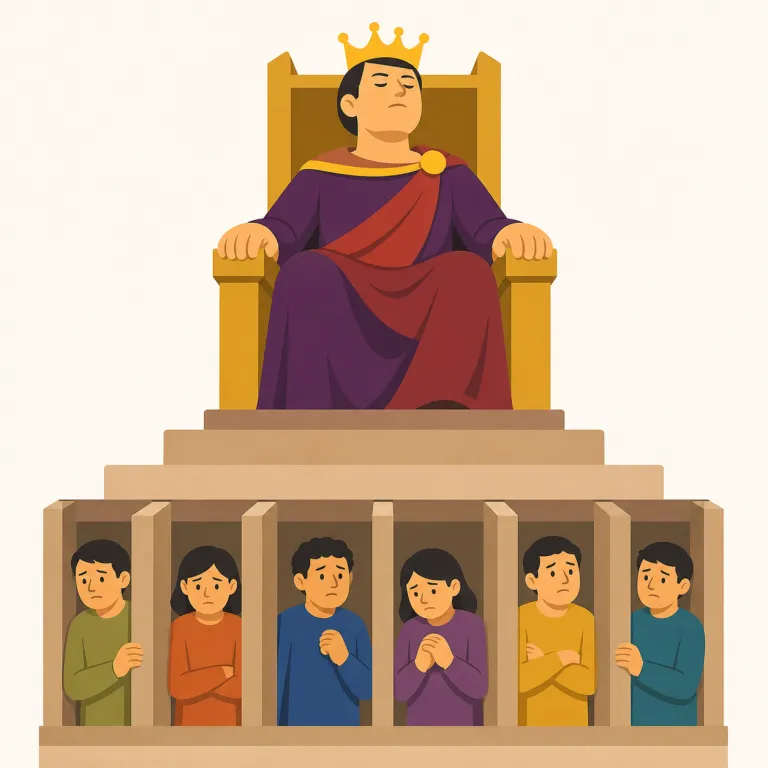
despotic
despotic は英検1級レベルの英単語で、「専制的な」という意味があります。発音記号は /dɪˈspɑːtɪk/ です。
専制的な
解説 Definition
一人の統治者が絶対的な権限を持ち、他者の自由や権利を制限する独裁的な支配や統治方式を表します。権力を独占し、民主的な過程を認めない専制的な体制を特徴とします。
Despotic describes a person or system that uses power in a cruel and controlling way. It is often used about rulers, governments, or leaders who do not allow freedom or opposition. The word has a strong negative meaning.
覚え方のコツ Memory Tip
despot(専制君主)を知っていると、despotic は「despot みたいな性質の」とつながります。セットで despotism(専制政治)も覚えると記憶が固定しやすい語です。使う場面は a despotic ruler, despotic regime のように、支配者や体制を批判的に述べるときが中心。authoritarian と近いですが、despotic は「権力を一人で握り、自由を押さえつける」圧の強さが目立ちます。
Think of the noun `despot`, a ruler with total power. `Despotic` is the adjective form, so it means "like a despot." It often appears in phrases like `a despotic ruler` or `a despotic regime`, so learn those together.
例文
The despotic ruler imposed harsh laws on his subjects.
専制的な支配者は臣民に厳しい法律を課しました。
People rebelled against the despotic government.
人々は専制的な政府に反抗しました。
His despotic management style made employees unhappy.
彼の専制的な経営スタイルは従業員を不満にさせました。
despotic の類義語・関連語
despotic の語源・成り立ち Etymology
despotic は despot「専制君主」+ -ic「…のような」から成り、despot はギリシャ語 despotes「主人、支配者」に由来します。関連語 despot や despotism を知ると、「主人が絶対に支配するような」が「専制的な」になったと見えてきます。
Despotic comes from despot plus the adjective ending -ic. Despot goes back to Greek despotes, meaning "master" or "ruler." The word developed from the idea of a master with complete control, which led to the modern sense of harsh or absolute rule; related words are despot and despotism.
同じレベルの語彙をもっと
英検1級の一覧へ →外部辞書で調べる
この英単語をクイズで覚えよう