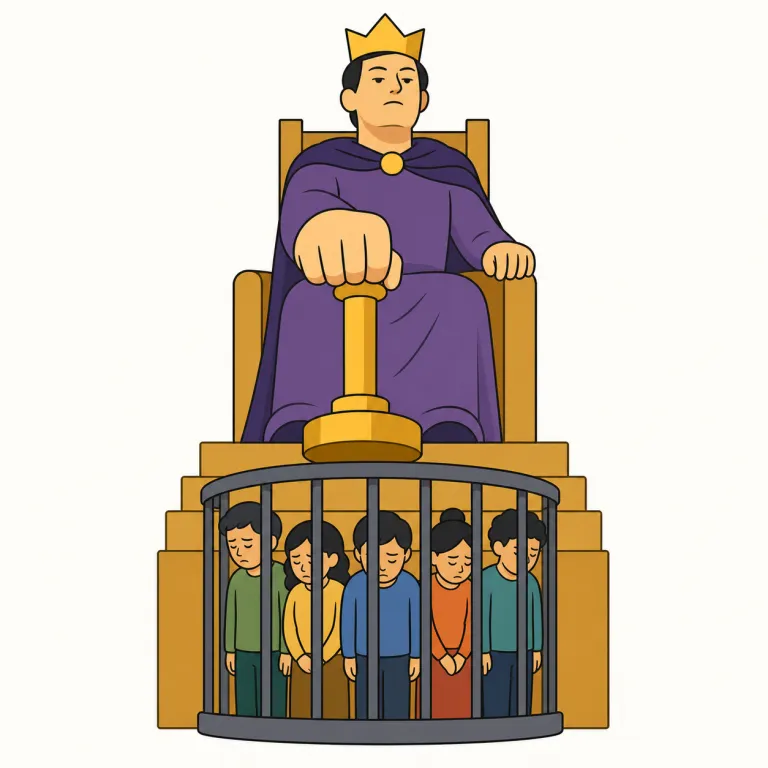
専制主義
解説 Definition
一人の支配者が絶対的な権力を握る政治体制。独裁政治や専制政治。
Despotism is a system of government in which one ruler has almost complete power and uses it in a controlling or unfair way. The word is common in politics and history. It usually has a negative meaning.
覚え方のコツ Memory Tip
まず despot「専制君主・独裁者」を土台にし、-ism が付くと「思想・体制」になると押さえると覚えやすいです。つまり despotism は「despot が支配する仕組み」。dictatorship と近いですが、こちらは個人の独裁そのものより、その支配が成り立つ政治体制をやや硬く述べる語。democracy の反対側にある語として、despotic rule, a regime sliding into despotism などの形で結び付けると記憶に残ります。
Start with `despot`, a ruler with total power, then add `-ism` for a system or ideology. That makes `despotism` easy to remember as the system of rule under a despot. It stays in memory well if you place it opposite `democracy`.
例文
The people rose up against the despotism of the ruling monarch.
国民は支配する君主の専制政治に対して立ち上がった。
Enlightenment philosophers wrote extensively about the dangers of despotism.
啓蒙思想家たちは専制主義の危険性について広範に著述した。
The country's long history of despotism made the transition to democracy challenging.
その国の長い専制主義の歴史が、民主主義への移行を困難なものにした。
despotism の類義語・関連語
despotism の語源・成り立ち Etymology
despotism はギリシャ語 despotes「主人・支配者」に由来し、despot + -ism で「専制という体制」を表します。despot や despotic と並べると、本来は単なる主人だった語が「意のままに支配する者」へ傾き、専制主義になった流れが見えます。
Despotism comes from despot plus the suffix -ism, meaning a system or practice. Despot goes back to Greek despotes, which first meant "master" or "lord." Over time, the idea shifted from an ordinary ruler or master to one who rules with unchecked power, which gave despotism its modern sense.
同じレベルの語彙をもっと
外部辞書で調べる
この英単語をクイズで覚えよう