deviate
deviate は英検1級レベルの英単語で、「逸脱する」という意味があります。発音記号は /ˈdiːviːˌeɪt/ です。
逸脱する
解説 Definition
通常の道筋や基準から外れる、逸脱する。標準や規範から離れることを意味する動詞。
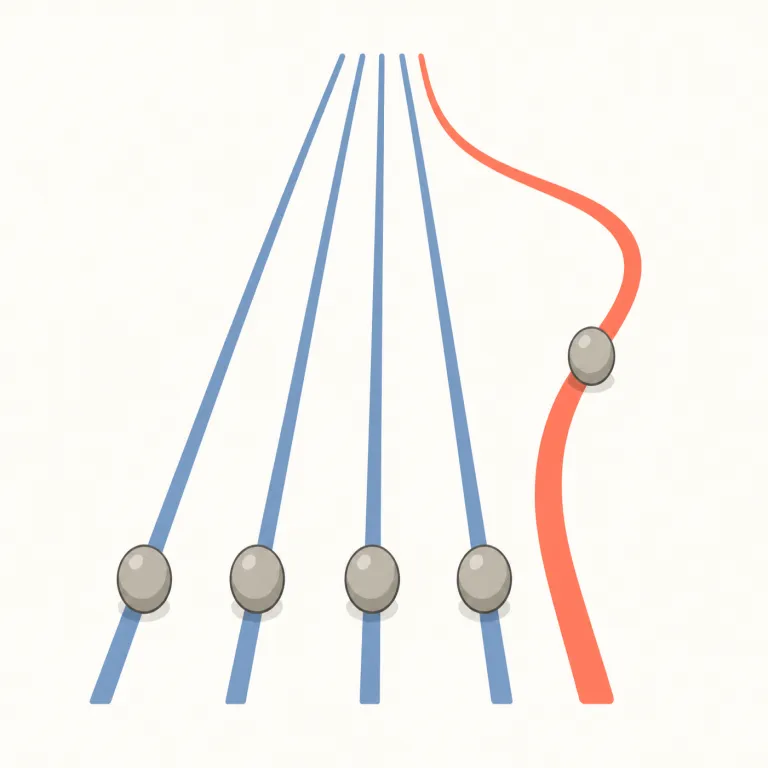
To deviate means to move away from a usual path, plan, rule, or standard. It can describe both physical movement and behavior that is different from what is expected. The word is often used in formal or written English.
覚え方のコツ Memory Tip
まず "deviate from ..." をかたまりで覚えると定着しやすいです。from がほぼセットで、「計画・道・基準」から外れる感覚を持つ語。実際の進路だけでなく、the plan, the standard, the norm など抽象的な対象にもよく使います。differ が単に「違う」なのに対し、deviate は「本来あるべき線からそれる」含みが強く、やや否定的に響きやすい点に注意。deviation も一緒に覚えると連想しやすくなります。
Learn it as the chunk `deviate from ...` because `from` often goes with it. It gives the image of moving away from a line, path, plan, or standard. Unlike `differ`, it often suggests leaving the expected course.
例文
The runner had to deviate slightly from the path to get around the fallen tree.
そのランナーは倒れた木を避けるため、道から少し外れなければならなかった。
We cannot deviate from the agreed schedule.
私たちは合意した予定から外れることはできない。
The bus had to deviate from its usual route because of roadwork.
そのバスは道路工事のため、通常の経路から外れなければならなかった。
えいたんごクイズでの正答率
この語をはじめて出題された 37人 のうち 29人 が正解しました(78%)。
えいたんごクイズの回答から集計した独自データです。1人につき最初に出題されたときの1回だけを数えており、復習や2回目以降の回答、「わからない」と時間切れは含みません。 集計時点は 2026年9月19日 です。
deviate の類義語・関連語
deviate の語源・成り立ち Etymology
deviate は後期ラテン語 deviare に由来し、de-「外れて」+ via「道」から成る語です。文字どおり「道からそれる」が出発点なので、進路だけでなく規則や基準から「逸脱する」という意味にも自然につながります。関連語は deviation と devious です。
Deviate comes from Late Latin deviare, built from de- meaning "away" and via meaning "road" or "way." Its first sense was literally "to go off the road." From there, it came to mean moving away from a usual path, rule, or standard, as in deviation and devious.
同じレベルの語彙をもっと
英検1級の一覧へ →外部辞書で調べる
この英単語をクイズで覚えよう