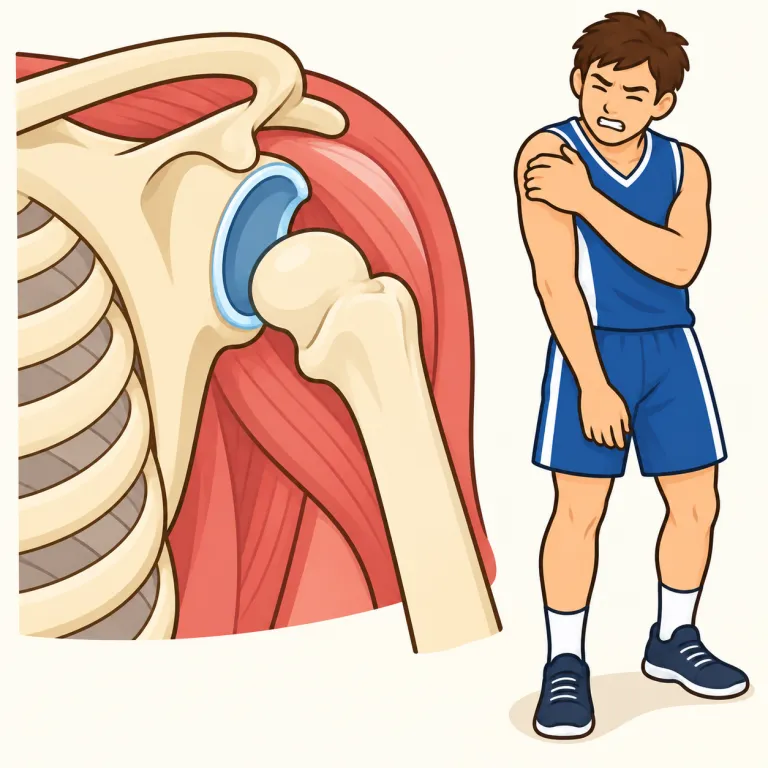
脱臼
解説 Definition
骨が関節から外れること(脱臼)。また、社会的・経済的な混乱や位置のずれも意味する。
Dislocations are injuries in which a bone is forced out of its normal position in a joint. This word is mainly used in medical contexts. In some advanced contexts, it can also mean serious disruptions or shifts in normal systems or arrangements.
覚え方のコツ Memory Tip
まず location「場所」を芯に置くと覚えやすいです。dis- は「離れる・ずれる」なので、dislocation は「本来ある場所から外れること」。骨が関節の定位置から外れるので「脱臼」になり、ここが基本義です。そこから比喩的に、人や物資の流れ、社会や経済の配置が乱れて“正常な位置関係が崩れる混乱”にも使われます。locate, location, relocate と並べて、「場所を定める→場所→移す→定位置から外れる」の流れで整理すると残ります。医療では shoulder dislocation、抽象では market dislocations などが出やすく、単なる move ではなく“配置の破綻”の感覚で覚えると使い分けしやすいです。
Keep `location` at the center of your memory. The prefix `dis-` suggests something moving away from its proper place, so `dislocation` is about being out of position. That image works for both a shoulder injury and for wider phrases like `market dislocations`.
例文
The earthquake caused widespread dislocations, displacing thousands of families from their homes.
地震は広範囲な混乱を引き起こし、何千もの家族が家を追われた。
Shoulder dislocations are among the most common injuries seen in contact sports.
肩の脱臼はコンタクトスポーツで見られる最も一般的な怪我の一つである。
The economic dislocations caused by the pandemic will take years to fully recover from.
パンデミックによる経済的混乱からの完全な回復には何年もかかるだろう。
dislocations の類義語・関連語
dislocations の語源・成り立ち Etymology
ラテン語dis-(離れて)+locare(置く)から成り、「本来の位置からずれること」が原義。語根locusは「場所」の意。関連語: location(場所)、relocate(移転する)。医学用語として骨や関節が正常な位置から外れた状態を指す。
Dislocations comes from Latin elements meaning "apart" and "to place," so the original idea is something moved out of its proper place. It is related to location and relocate, from the same place root. The sense later became especially important in medicine for bones or joints that are no longer in their normal position.
同じレベルの語彙をもっと
外部辞書で調べる
この英単語をクイズで覚えよう