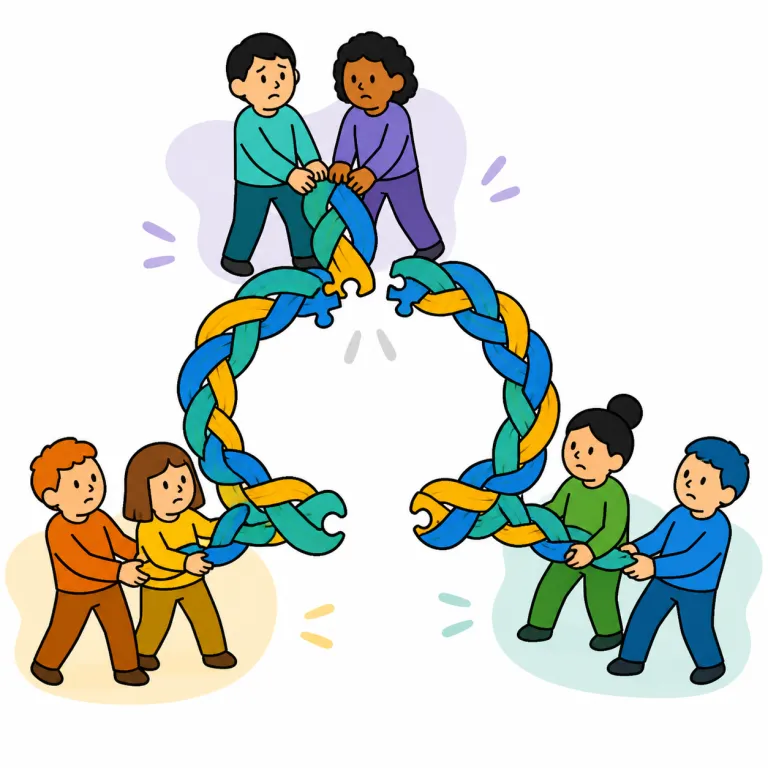
不一致
解説 Definition
集団内の意見や行動が一致せず、まとまりがない状態。分裂・不和。
Disunity means a lack of agreement, harmony, or togetherness within a group. It is often used when talking about teams, organizations, communities, or countries that are divided. The word emphasizes separation and internal conflict rather than cooperation.
覚え方のコツ Memory Tip
unity「団結・一致」を知っていれば、先頭に dis- が付いて「一致がほどけた状態」と見える。個人同士の単なる反対意見なら disagreement だが、disunity は集団全体がまとまらず、チームや組織に一体感がない感じ。political disunity, internal disunity のように、内部の不和や分裂を述べる場面でよく使う。unite, union, community など “結びつく” 仲間語と並べると定着しやすい。
Build this from `unity`, which means togetherness. Add the prefix `dis-`, and you get the idea of unity breaking apart. `Disunity` is usually about a group, team, or organization that cannot stay together, not just two people disagreeing. Connect it with words like `unite`, `union`, and `community` to make the contrast clear.
例文
Disunity within the ruling party led to its defeat in the election.
与党内の不一致が選挙での敗北につながった。
The disunity among the allies weakened their bargaining position.
同盟国間の不和が交渉上の立場を弱めた。
Internal disunity can be more damaging to an organization than external threats.
内部の分裂は外部の脅威よりも組織に大きなダメージを与えることがある。
disunity の類義語・関連語
disunity の語源・成り立ち Etymology
disunity は dis-(離れて・否定)+ unity(統一)から成る語です。unity はラテン語 unitas、さらに unus「一つ」にさかのぼるため、disunity は文字通り「一つでない状態」、つまり不一致だと分かります。関連語に unite、unique があります。
Disunity is built from dis- "apart, not" and unity. Unity comes from Latin unitas, from unus "one," which is also behind words like unite and unique. So disunity originally means "not being one," and it developed into the idea of lack of agreement or togetherness.
同じレベルの語彙をもっと
外部辞書で調べる
この英単語をクイズで覚えよう