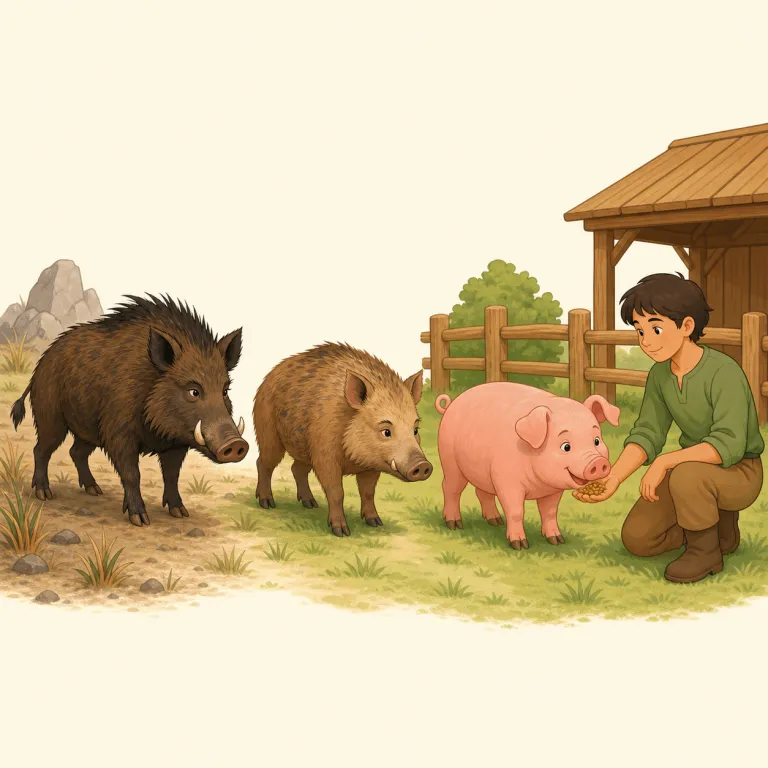
家畜化
解説 Definition
野生動物を飼い慣らして、人間の生活に適応させるプロセス。農業の発展において重要な役割を果たした文明の転換点です。
Domestication is the process of training animals or cultivating plants so they live with humans and are useful to them. It is commonly used in history, biology, and agriculture. The word can also refer more generally to making something less wild or less independent.
覚え方のコツ Memory Tip
domestic「家庭の・人の暮らしに関わる」が見えれば覚えやすい語です。wild の反対側で、「野生のものが家・人間社会の側に入る」と捉えると核がつかめます。domesticate が動詞「家畜化する」、-ation が付くと「その過程・作用」という名詞化。animal domestication の形で出やすく、tame が個体をおとなしくする感じなのに対し、こちらは種全体が世代を通じて人間生活に適応していく長い変化だと押さえると残りやすいです。
Build it from `domestic`, the opposite side of `wild`. `Domestication` is the long process of bringing animals or plants into human life, not just calming one animal for a short time. Think of a species gradually adapting to living with people over generations.
例文
The domestication of dogs began thousands of years ago.
犬の家畜化は数千年前に始まった。
The domestication of horses revolutionized transportation and warfare in ancient civilizations.
馬の家畜化は古代文明における輸送と戦争に革命をもたらした。
The domestication process changes animal behavior over generations.
家畜化のプロセスは世代を通じて動物の行動を変える。
domestication の類義語・関連語
派生語
紛らわしい語
domestication の語源・成り立ち Etymology
domestication はラテン語 domus「家」から出た domesticus「家の、中で飼う」が土台で、-ation が付いて名詞化した語です。domestic や domicile も同根で、「野生を家の内側へ移すこと」と考えると、家畜化が人の暮らしへの組み込みだと見えてきます。
Domestication comes from Latin domus, meaning "house," through domesticus, meaning "of the home." The word originally carried the idea of bringing something into the household. From that, it developed into the idea of adapting wild animals or plants to human living. Related words include domestic and domicile.
同じレベルの語彙をもっと
外部辞書で調べる
この英単語をクイズで覚えよう