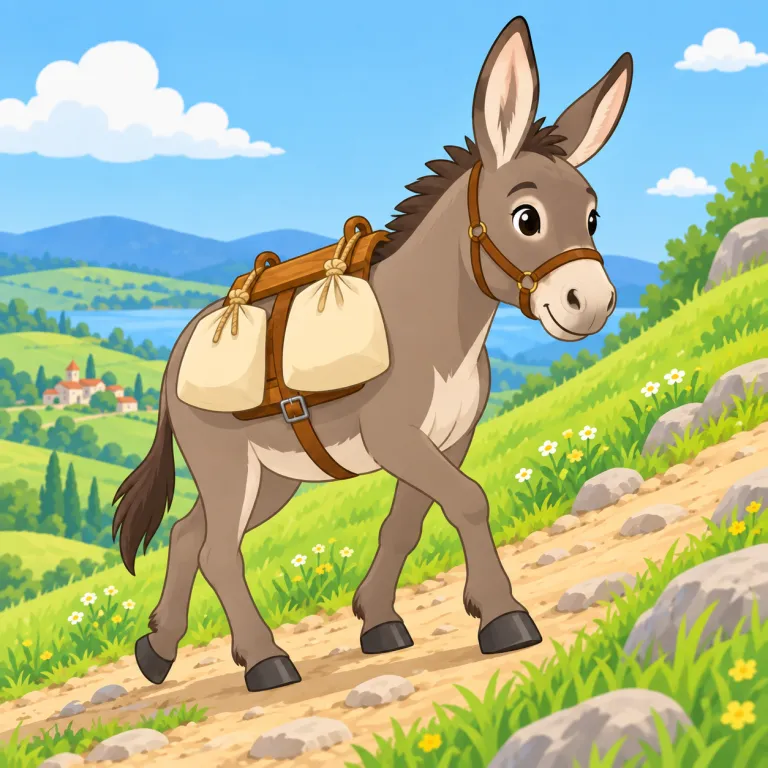
ロバ
解説 Definition
ロバという意味です。日本語でも「ドンキー」と言うことがありますが、英語では動物としてのロバを指す一般的な名詞です。
A domesticated hoofed mammal related to the horse, typically smaller and distinguished by long ears; it is often kept or used for carrying loads and farm work.
覚え方のコツ Memory Tip
donkey は荷物を運ぶ灰色のロバを思い浮かべ、carry bags、gray donkey、farm などの組み合わせで覚えましょう。horse より一般に小さく、長い耳と独特の鳴き声を持つ家畜です。mule はロバと馬の交雑種なので別物。語源は確定しておらず、dun「灰褐色」との関係は可能性のある説として扱います。
Picture a small gray farm animal with long ears carrying bags up a hill: that typical scene fixes donkey as the ordinary English noun for a donkey or ass. Useful combinations include a gray donkey, ride a donkey, and a donkey carrying a load. Keep it separate from a mule, which is normally the offspring of a donkey and a horse, and from a pony, which is a small horse. The word’s deeper origin is uncertain, so rely on the animal’s clear features and common working role rather than an invented sound story.
例文
A donkey carried the bags up the hill.
ロバが荷物を丘の上まで運びました。
The farmer keeps one donkey near the barn.
その農家は納屋の近くでロバを一頭飼っています。
We saw a gray donkey on the small farm.
私たちは小さな農場で灰色のロバを見ました。
donkey の語源・成り立ち Etymology
donkey は18世紀に英語に現れ、次第に ass に代わる日常的な呼称となった。正確な語源は確定していない。dun(灰褐色)との関連や、語尾が monkey などの影響を受けたとする説があるが、確証はない。
Donkey appeared in English in the eighteenth century and gradually replaced ass as the most common everyday name for the animal. Its exact origin remains uncertain. One proposal connects the first part with dun, referring to a dull grayish-brown color, and treats the ending as a familiar or diminutive formation, possibly influenced by words such as monkey. This explanation is plausible but not established, so the word’s modern form and ordinary animal sense are more certain than its historical construction.
同じレベルの語彙をもっと
外部辞書で調べる
この英単語をクイズで覚えよう