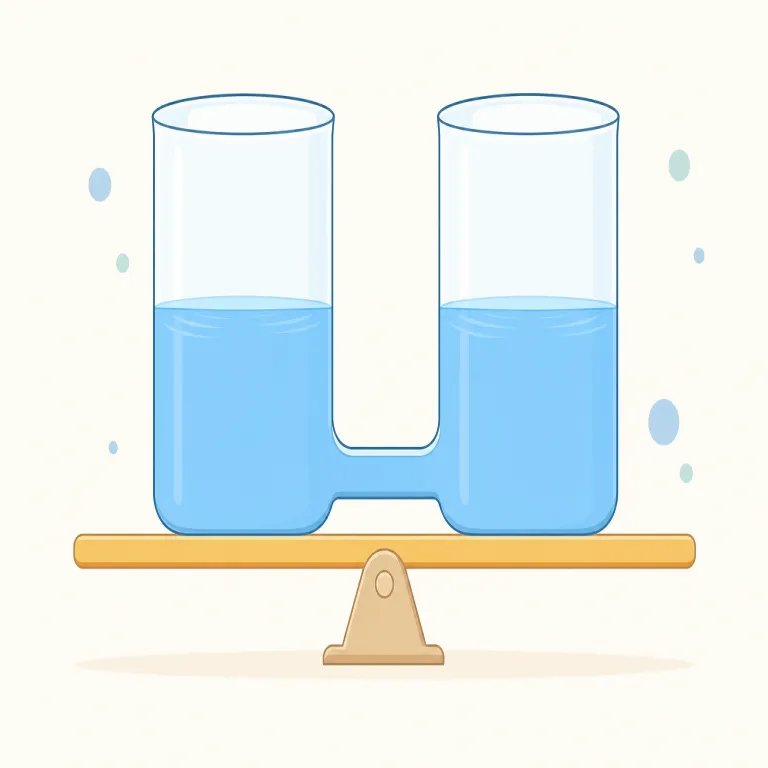
平衡化
解説 Definition
平衡状態に達するプロセス。システムが不安定な状態から安定した均衡状態へと進行する過程。
Equilibration is the process of becoming balanced or stable after change. It is used in scientific and psychological contexts to describe a move toward equilibrium, where different forces or conditions are in balance.
覚え方のコツ Memory Tip
equilibrium(均衡)を知っていれば、その「均衡状態にしていく過程」が equilibration。equal と同じ equi- は「等しい」、-ation は「〜すること」なので、結果の状態よりも、温度や濃度の差がならされて系が落ち着いていく動きに注目すると記憶に残る。平衡そのものではなく、平衡へ向かう時間を含む語。実験では “allow equilibration” “equilibration time” が定番で、equalization(均一化・平準化)とは別物。
Connect it with `equilibrium`, which is the balanced state. `Equi-` means equal, and `-ation` often shows a process, so this word is about moving toward balance, not just the final balance itself. In science, you often see phrases like `equilibration time` or `allow equilibration`. Do not confuse it with `equalization`, which is different.
例文
Equilibration occurs as the chemical mixture gradually reaches a stable state.
化学混合物が徐々に安定した状態に達する過程で、平衡化が起こります。
Piaget described equilibration as a key mechanism in cognitive development.
ピアジェは平衡化を認知発達の重要なメカニズムとして説明しました。
The samples required two hours of equilibration before measurement.
サンプルの平衡化には測定前に2時間を要しました。
equilibration の類義語・関連語
equilibration の語源・成り立ち Etymology
equilibration は equi-「等しい」+ libr-「てんびん」+ -ation「こと」から成り、語源はラテン語 aequus と libra です。原義は「重さを釣り合わせること」で、平衡が結果より調整の動作を含む語だと見えてきます。関連語は equal, equilibrium。
Equilibration comes from Latin roots meaning "equal" and "balance": aequus and libra, through equilibrium and the ending -ation. Its earliest sense was the act of balancing weights on a scale. From that, it developed into the idea of a process that brings things into balance, rather than balance as a finished state. Related English words include equal and equilibrium.
同じレベルの語彙をもっと
外部辞書で調べる
この英単語をクイズで覚えよう