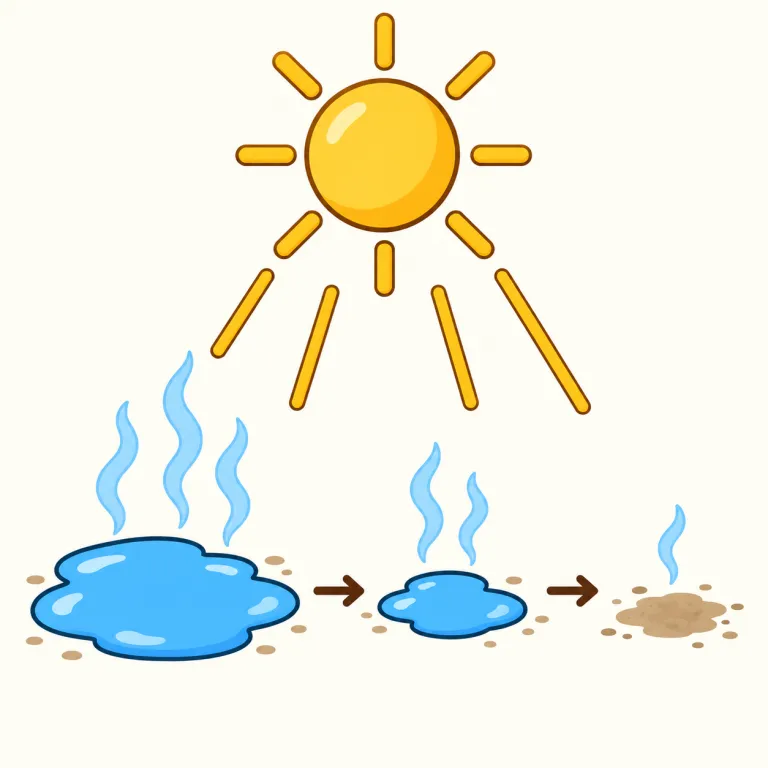
蒸発する
解説 Definition
evaporating は evaporate(蒸発する、蒸発させる)の現在分詞・動名詞です。液体が気体に変わっていく状態を表し、水や溶剤などについてよく使われます。
The present participle or gerund of evaporate, describing a liquid that is changing into vapor or the process of causing that change. It often emphasizes that the change is currently in progress.
覚え方のコツ Memory Tip
原形 evaporate の語末の e を落として -ing を付けた現在分詞・動名詞。e-「外へ」+ vapor「蒸気」の構成から、液体が蒸気となって外へ出る像を持つ。water is evaporating や evaporating solution のように、進行中の気化を表す。
Begin with evaporate, then drop its final silent e before adding -ing: evaporate becomes evaporating. The element vapor provides the key image—a liquid is becoming vapor and moving into the air. Use it for an ongoing process, as in “The water is evaporating” or “the evaporating solution.” Heat can speed up evaporation, but a liquid may evaporate without boiling. This distinction is useful: boiling occurs throughout a liquid at its boiling point, while evaporating commonly describes the gradual escape of molecules from the surface.
例文
The water is evaporating quickly in the hot sun.
強い日差しの中で、水がすぐに蒸発しています。
She watched the thin layer of alcohol evaporating from the glass.
彼女はグラスについた薄いアルコールの層が蒸発していくのを見ていました。
As the solution was evaporating, crystals began to form at the bottom of the dish.
溶液が蒸発するにつれて、皿の底に結晶ができ始めました。
evaporating の類義語・関連語
evaporating の語源・成り立ち Etymology
ラテン語 evaporare(蒸気として出す)が語源。接頭辞 e-(外へ)+ vapor(蒸気)の組み合わせ。関連語に vapor(蒸気)、vaporize(気化させる)がある。液体が「外へ蒸気となって出ていく」という原義がそのまま現在の意味に残っている。
Evaporating is the -ing form of evaporate, with the final e removed before the suffix is added. Evaporate derives from Latin evaporare, “to disperse in vapor,” formed from e- or ex-, “out,” and vapor, “steam or vapor.” Its structure therefore reflects the physical image of material passing outward as vapor. English relatives include vapor, evaporation, and vaporize.
同じレベルの語彙をもっと
外部辞書で調べる
この英単語をクイズで覚えよう