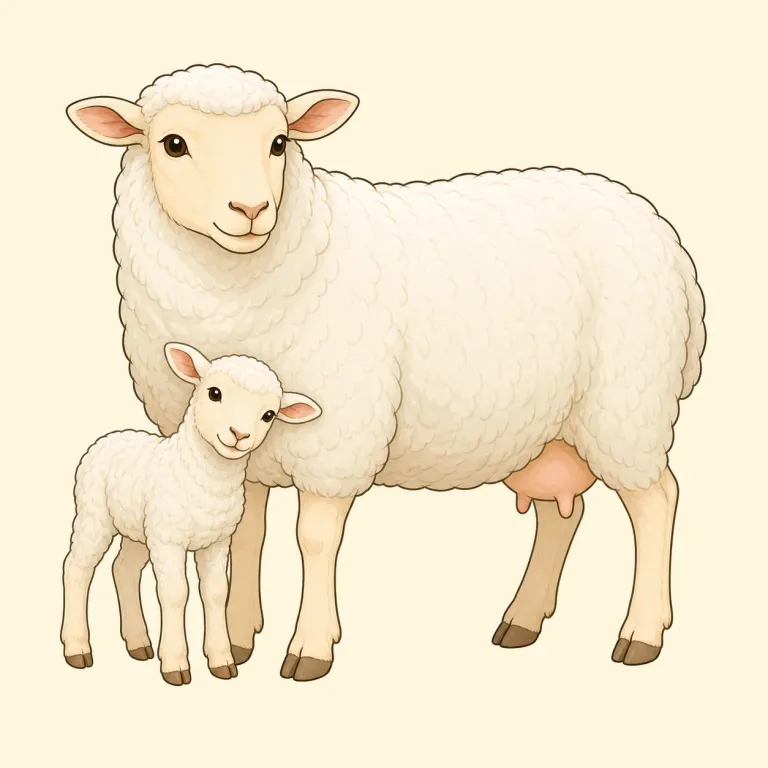
雌羊
解説 Definition
成長した雌の羊を指す語。雄羊を意味するramと区別して、牧畜などの文脈で使われる。
An adult female sheep is called this. The term is used in farming and is distinguished from a ram, which is an adult male sheep.
覚え方のコツ Memory Tip
ewe は「成長した雌羊」だけを指し、発音はアルファベットの U や代名詞 you と同じです。「You are a mother sheep.」と雌羊に呼びかける場面を音の手掛かりにすると覚えやすいでしょう。sheep は羊全般、ram は成長した雄羊、lamb は子羊なので、ewe gives birth to lambs「雌羊が子羊を産む」という家族図で区別します。複数形は ewes で、牧場では keep ewes、a ewe feeding her young のように現れると押さえると定着しやすいです。
The word sounds exactly like “you” and the letter U. Imagine saying, “You are a mother sheep,” to remember that a ewe is female, while a ram is male and a lamb is young.
例文
The ewe gave birth to two lambs.
その雌羊は二匹の子羊を産んだ。
A ewe was feeding her young.
一匹の雌羊が子に乳を与えていた。
The farmer keeps the ewes in this field.
農家はこの牧草地で雌羊を飼っている。
ewe の語源・成り立ち Etymology
古英語 eowu(雌羊)から。印欧祖語 *h₂ówis(羊)に遡り、ラテン語 ovis(羊)と同根。関連語は ovine(羊の)。英語の sheep が種全体を指すのに対し、ewe は雌羊のみを指す古来の区別を保つ語。
The word comes from Old English eowu and can be traced to an Indo-European word for sheep. It shares this older root with Latin ovis and the English word ovine.
同じレベルの語彙をもっと
外部辞書で調べる
この英単語をクイズで覚えよう