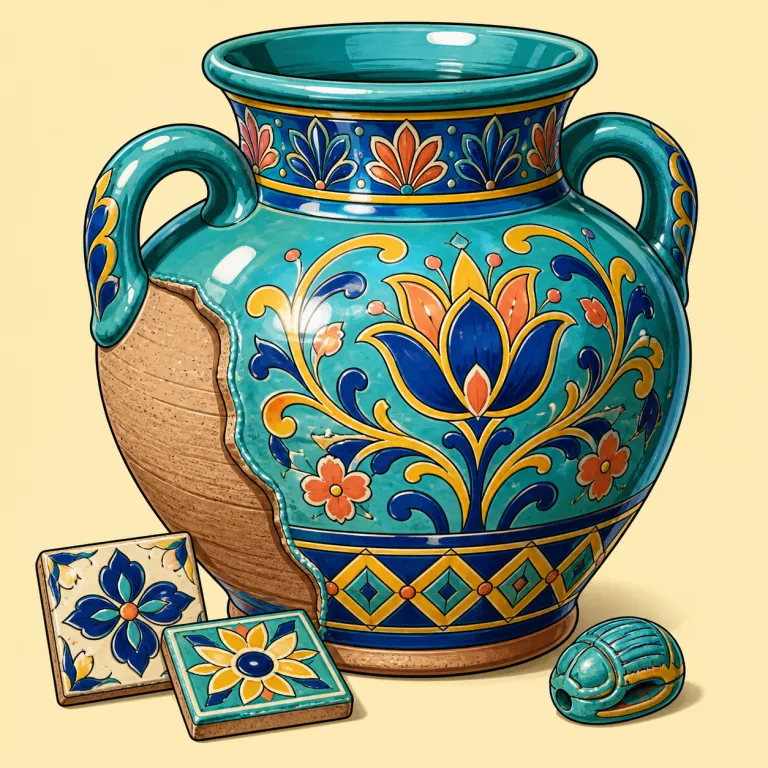
ファイアンス
解説 Definition
ヨーロッパの錫釉陶器。また、古代エジプトなどの文脈では、粉砕した石英を主成分とし、表面を施釉して焼成した非粘土質の工芸材料やその製品を指す。
Faience is a type of fine pottery with a smooth, shiny glazed surface, often brightly colored or decorated. The word is mainly used in art, design, and historical discussions about ceramics.
覚え方のコツ Memory Tip
faienceは美術史で二つの代表的な対象を指します。European faienceなら錫釉陶器、ancient Egyptian faienceなら石英を主成分とする非粘土質の施釉材料や工芸品です。「欧州では陶器、古代エジプトでは石英質」と文脈ごとに分け、どちらも色鮮やかな施釉製品を思い浮かべると覚えやすくなります。
Place it under the big group `ceramics`, but make it more specific: decorated, glazed pottery. It is easier to remember if you contrast it with `porcelain`, which suggests fine hard china. `Faience` points more to colorful, shiny, artistic surfaces you might see in museums or craft history.
例文
Faience tiles decorated the ancient Egyptian temples.
古代エジプトの神殿はファイアンス製のタイルで飾られていた。
The museum displays beautiful faience objects from antiquity.
その博物館は古代の美しいファイアンス製工芸品を展示している。
Faience production requires skilled craftspeople.
ファイアンスの製作には熟練した職人が必要である。
faience の類義語・関連語
紛らわしい語
faience の語源・成り立ち Etymology
イタリアの都市ファエンツァ(Faenza)に由来。この町は15世紀以降、錫釉をかけた色鮮やかな陶器の一大産地として名を馳せた。フランス語 faïence を経て英語に入った。関連語:ceramic(陶器)、porcelain(磁器)。産地がそのまま製品名になった例。
Faience comes through French from Faenza, a town in Italy famous for its fine glazed pottery from the Renaissance period onward. The place name became the product name, which is a common pattern in word history. English borrowed it from French after the material was already well known. It is similar in type to other place-based craft names.
同じレベルの語彙をもっと
外部辞書で調べる
この英単語をクイズで覚えよう