ファンダンゴ
解説 Definition
fandango は、スペインやラテン系の文化に由来する活発な舞踊やその音楽を指す語です。日本語の「ファンダンゴ」は音楽や舞踊名として使われますが、英語でも主にその伝統的な踊りや曲を表します。
A lively traditional Spanish dance, usually performed by a couple with rhythmic steps, or the music composed to accompany or imitate that dance.
覚え方のコツ Memory Tip
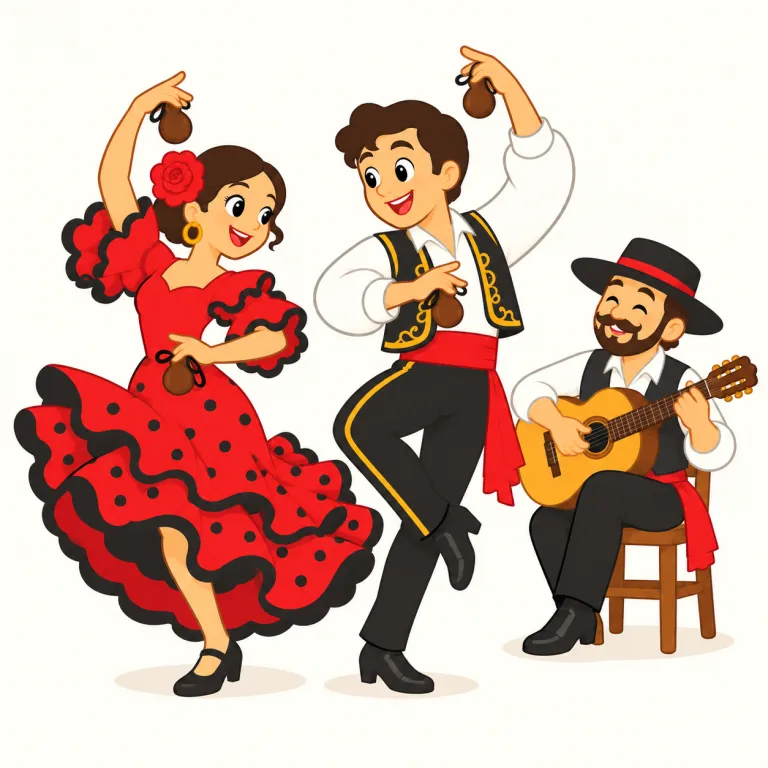
fandango はスペインに由来する活発な舞踊、またはその伴奏音楽の名称で、日本語の「ファンダンゴ」とほぼ一致します。perform a lively fandango なら踊り、practice a fandango on the guitar なら曲を指します。flamenco と関連する文化圏の語ですが同義ではなく、特定の舞踊・音楽形式として区別して覚えましょう。
Treat fandango as the name of both a dance and its music. Context reveals which is meant: dancers perform a lively fandango, while a guitarist practices or plays a fandango. Picture a Spanish couple using energetic, rhythmic steps while instrumental music drives the movement. The word is associated with Spanish musical culture, but it is not simply another name for flamenco; it identifies a particular dance and musical form with several regional varieties. Learning the verbs perform, dance, play, and practice alongside fandango will help you recognize its two closely connected meanings.
例文
The dancers performed a lively fandango.
踊り手たちは活気のあるファンダンゴを披露しました。
The guitarist practiced a fandango for the concert.
ギタリストはコンサートに向けてファンダンゴを練習しました。
A fast fandango filled the hall with energy.
速いファンダンゴが会場を活気で満たしました。
fandango の類義語・関連語
派生語
紛らわしい語
fandango の語源・成り立ち Etymology
fandango はスペイン語 fandango から英語に入った舞踊名で、そのさらに先の起源は不詳です。ポルトガル語 fado やアフリカ系語源との関連説があり、陽気で異国風の歌舞の名がそのまま英語でも定着しました。関連語として fandanguillo が知られます。
Fandango was borrowed into English from Spanish fandango, the name of a dance and its accompanying music. The Spanish word is recorded from the early eighteenth century, but its origin before that point is uncertain. Various Portuguese, African, and other connections have been proposed without a universally accepted conclusion. It is therefore safest to remember it as a Spanish cultural term adopted unchanged into English for the dance and musical form.
同じレベルの語彙をもっと
外部辞書で調べる
この英単語をクイズで覚えよう