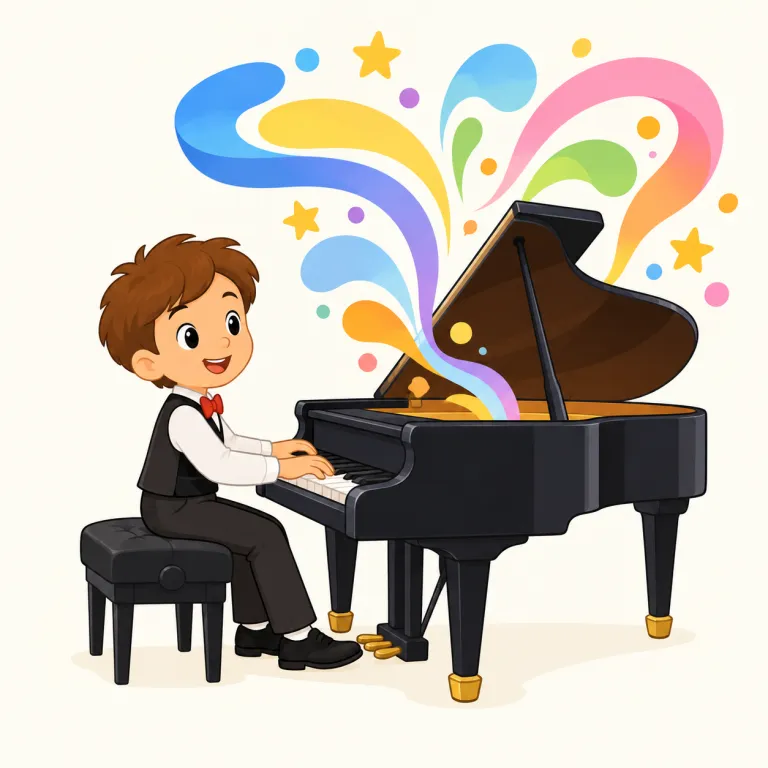
ファンタジア
解説 Definition
fantasia は「幻想曲(ファンタジア)」を指す名詞で、構成や展開が比較的自由で想像力豊かな楽曲に使われます。作品の題名として使われる場合は、Fantasia と大文字で書かれることもあります。
A fantasia is an instrumental musical composition whose structure and development are relatively free and imaginative rather than governed by a strict conventional form. The word may also appear capitalized when it forms part or all of a particular work’s title.
使い方 Usage
- 一曲なら a fantasia。play a fantasia「幻想曲を演奏する」、a fantasia for violin and piano「バイオリンとピアノのための幻想曲」などと使います。 Use a fantasia for one composition: play a fantasia, or a fantasia for violin and piano.
- 一般的な楽曲形式は fantasia と小文字で書きます。特定の作品の題名では Fantasia と大文字になることがあります。 Use lowercase fantasia for the general musical form. Fantasia may be capitalized when it is a particular work’s title.
覚え方のコツ Memory Tip
fantasy「想像・幻想」と結び付け、想像力を自由に展開する曲を思い浮かべましょう。厳密な定型に強く縛られない「幻想曲」と覚えます。
Connect fantasia with fantasy and imagine musical ideas developing freely. Remember it as a composition that is not tightly bound to a strict conventional form.
例文
The pianist played a short fantasia.
そのピアニストは短い幻想曲を演奏しました。
The composer wrote a fantasia for violin and piano.
その作曲家はバイオリンとピアノのための幻想曲を書きました。
fantasia の類義語・関連語
fantasia の語源・成り立ち Etymology
ギリシャ語「現れる」の語根phant-に状態の-iaが加わり、イタリア語でfantasiaとなりました。実在せぬ像を心に描く意味から、形式に縛られない自由な作品を指すように発展しました。関連語にfantasy(空想)やphantom(幻影)があります。
Fantasia entered musical vocabulary through Italian fantasia, meaning imagination, fancy, or a product of the imagination. The Italian word continues Latin phantasia, borrowed from Greek phantasia, which referred to an appearance, impression, or mental image and derives from a verb meaning “to make visible” or “appear.” In music, the term came to designate a composition shaped by imaginative freedom. Fantasy and phantom belong to the broader historical family associated with appearances and imagined images.
同じレベルの語彙をもっと
外部辞書で調べる
この英単語をクイズで覚えよう