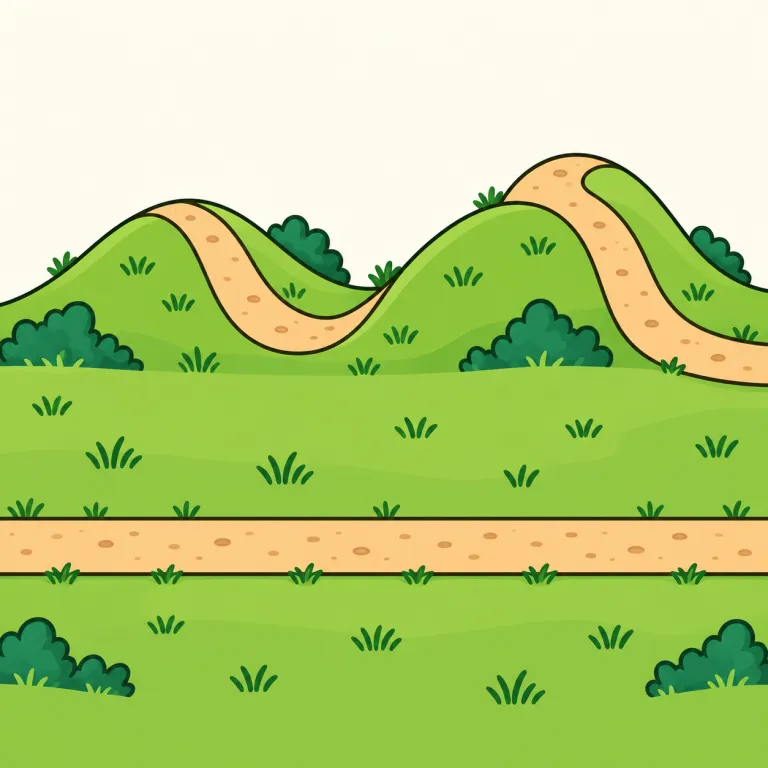
もっと平らな
解説 Definition
flatter は flat(平らな)の比較級で、「もっと平らな、より平坦な」という意味です。地面、面、形などを比べて、一方がもう一方より起伏や傾きが少ないことを表します。
Flatter is the comparative form of the adjective flat. It describes a surface, path, shape, or other physical feature that has less slope, curvature, unevenness, or height variation than another one or than it had previously.
覚え方のコツ Memory Tip
ここでは動詞 flatter「お世辞を言う」ではなく、形容詞 flat「平らな」の比較級です。短母音+単子音字で終わるため t を重ねて -er を付け、flatter /ˈflætər/ となります。flatter than、a flatter surface、a flatter top の形で、起伏や傾きがより少ない二つの面を比較して覚えます。
For this meaning, flatter is the comparative of flat, not the verb flatter, “to praise excessively.” Flat is a short adjective ending in one vowel followed by one consonant, so double the final t before adding -er: flat becomes flatter, pronounced /ˈflætər/. Use it when comparing physical forms: a path is flatter than another path, or a design has a flatter top. The memory key is “less slope or curvature.” If the sentence mentions praise or making someone feel pleased, flatter is instead an unrelated verb with the same spelling.
例文
This path is flatter than the one through the hills.
この道は丘を通る道より平らです。
Use a flatter surface for the experiment.
実験にはもっと平らな面を使ってください。
The new design has a flatter top.
新しいデザインは上部がより平らになっています。
flatter の類義語・関連語
flatter の語源・成り立ち Etymology
flatter は flat「平らな」の比較級で、flat は古ノルド語 flatr「平たい」に由来します。北欧系の語がそのまま英語に入り、そこへ比較級の -er がついて「より平らな」となり、関連語に flatten、flatly があります。
Flatter in this sense is formed from the adjective flat by doubling the final consonant and adding the comparative suffix -er. Flat comes from Old Norse flatr, meaning “flat” or “level,” and entered Middle English with essentially the same physical sense. The comparative therefore means having a greater degree of flatness. This form is identical in spelling to the separate verb flatter, whose history and meaning are unrelated to physical levelness.
同じレベルの語彙をもっと
外部辞書で調べる
この英単語をクイズで覚えよう