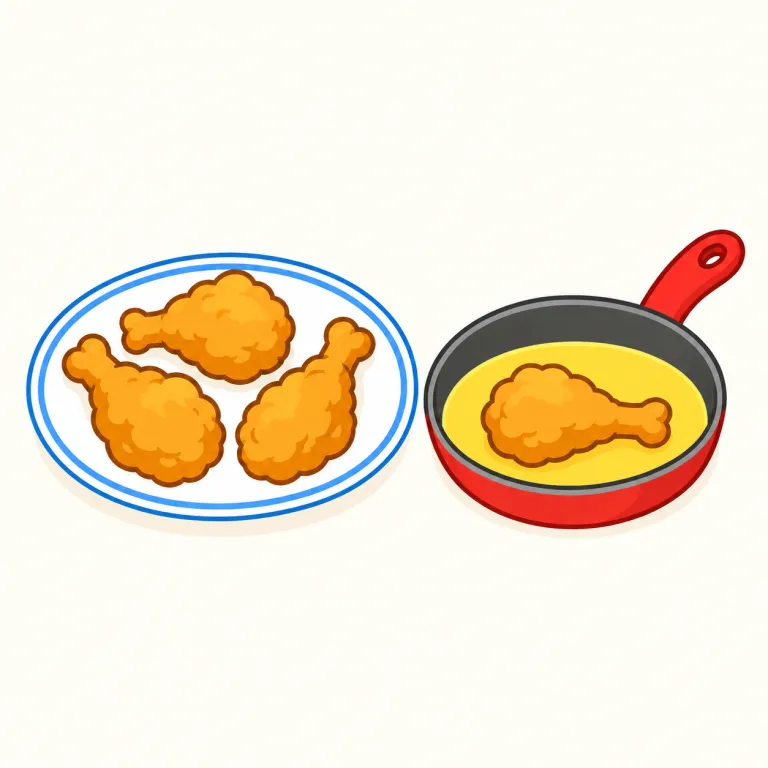
揚げた
解説 Definition
fried は、油で揚げた、または油で焼いた食べ物を表す形容詞です。fried chicken や fried rice のように、料理名の前につけて使われることが多いです。
Fried describes food that has been cooked in hot oil or fat, either by being immersed in it or cooked in a lightly oiled pan. It commonly appears before a food noun, as in fried chicken or fried rice.
覚え方のコツ Memory Tip
fried は fry「油で揚げる・焼く」の過去分詞が形容詞化した語です。子音+y の前に母音があるため、単純な fryed ではなく y を ie に替えて fried と綴り、発音は /fraɪd/。fried chicken、fried fish、fried rice のように料理名の前に置き、「油で調理された状態」と覚えます。
Begin with the verb fry, “cook in hot oil or fat.” Fried is its past participle and is commonly used as an adjective for the resulting food. The spelling changes from y to ie before -d, giving fried, and it is pronounced /fraɪd/ as one syllable. Remember it in familiar food combinations: fried chicken, fried fish, fried potatoes, and fried rice. The word identifies the cooking method or cooked state; it does not necessarily mean deep-fried, since food can also be fried in a pan.
例文
I ate fried chicken for dinner.
私は夕食にフライドチキンを食べました。
Fried potatoes are popular with many children.
揚げたじゃがいもは多くの子どもに人気があります。
The restaurant serves fried fish with rice.
そのレストランは揚げた魚をご飯と一緒に出します。
fried の類義語・関連語
fried の語源・成り立ち Etymology
fried は fry の過去分詞形で、fry は古フランス語 frire を通じてラテン語 frigere「焼く・炒る」にさかのぼります。-ed が付いて「油で焼かれた状態」を表し、日本語の「揚げた」に当たります。関連語は fry, fritter。
Fried is the past participle of fry, used adjectivally. Fry entered Middle English through Old French frire, from Latin frīgere, meaning “to roast or fry.” In English spelling, the final y of fry changes to ie before the past-tense ending d, producing fried. Its culinary sense covers cooking food in hot oil or fat.
同じレベルの語彙をもっと
外部辞書で調べる
この英単語をクイズで覚えよう