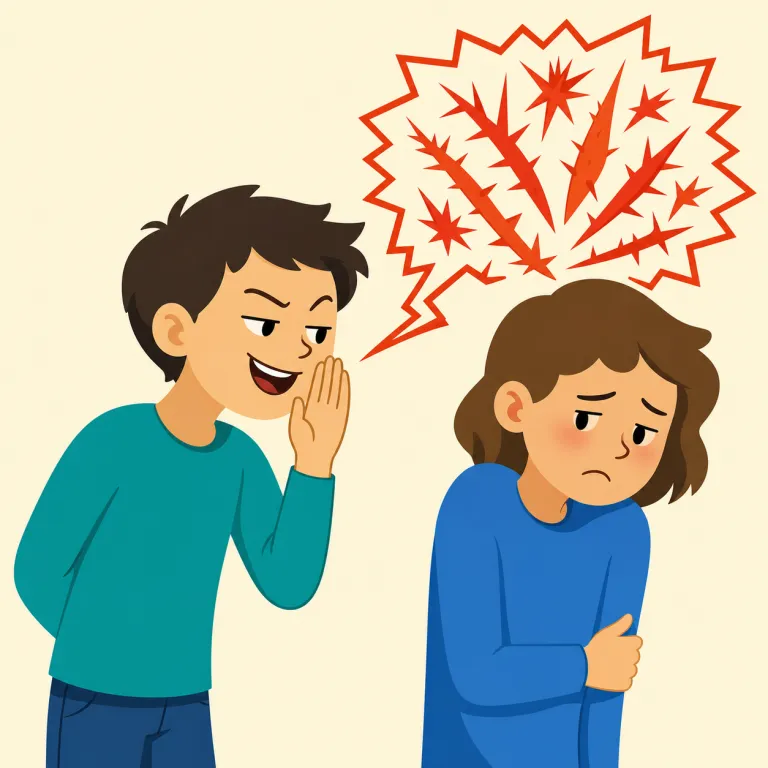
嘲笑、あざけりの言葉
解説 Definition
人をばかにしたり、失敗や弱点を突くように言う嘲笑やあてこすりを指す名詞。単なる冗談よりも悪意や軽蔑を帯びることが多く、相手の気分を害する皮肉なひと言やからかいの発言を表す。会話でも文章でも、見下す響きを伴いやすい語である。
A gibe is a rude or mocking remark made to laugh at someone. It is used for spoken or written comments that show scorn rather than friendly humor.
覚え方のコツ Memory Tip
gibe は「ただの joke ではなく、相手に刺さる verbal jab(言葉の一撃)」として覚えると残りやすいです。軽い冗談より、失敗や弱点を突く sneer・mocking remark に近い名詞。会話では throw/hurl a gibe at ... の形を思い浮かべると、あてこすりを投げつける感じが出ます。つづりは give に似ていますが意味は無関係なので注意。jibe は別義で「一致する」がよく出るため混同しないのがコツです。
Think of `gibe` as more than a joke: it is a sharp, mocking comment. It often appears in patterns like `throw a gibe at someone`, which gives the image of words being thrown like little attacks. Be careful not to mix it up with `give`, even though the spelling looks similar. Also keep it separate from `jibe`, which often means `agree`.
例文
The gibe at his mistake was harsh.
彼のミスをあざけるその一言はきつかった。
The crowd's gibe hurt his feelings.
群衆のあざけりの言葉は彼を傷つけた。
Such gibes are hurtful and unkind.
そのようなあざけりの言葉は人を傷つけ、思いやりに欠ける。
gibe の類義語・関連語
紛らわしい語
gibe の語源・成り立ち Etymology
gibe は「嘲る」を表す古フランス語 giber / gaber 系に由来するとされ、さらに北欧語系の「からかう・ばかにする」語へつながる。はっきりした接辞分解はないが、口でちくりと刺す感じが核。jibe や gab も近縁で、ただ笑うのでなく相手を小さく見せる語感が残る。
Gibe probably came into English from Old French forms such as giber or gaber, meaning "to mock" or "to joke at." It may also connect more deeply with Germanic or Norse words for scoffing or teasing. Over time, it came to suggest not just joking, but a sharp, mocking verbal attack; jibe and gab are related in form or history.
同じレベルの語彙をもっと
外部辞書で調べる
この英単語をクイズで覚えよう