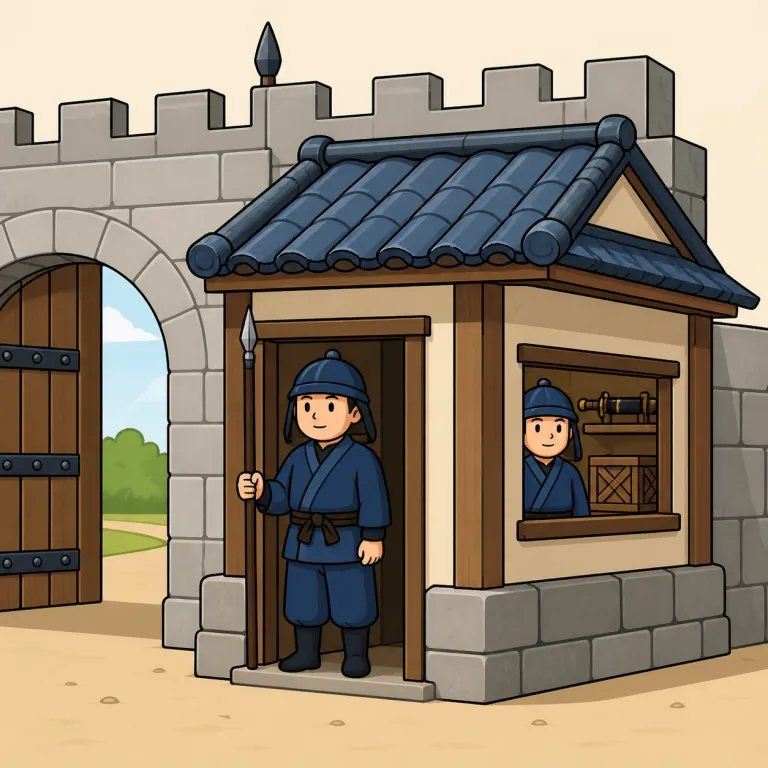
営倉、軍用拘禁所
noun 名詞軍隊で、規律違反などにより拘禁された兵士を収容する施設を指す。守衛が詰める建物という意味と重なる場合もあるが、be sent to the guardhouse などでは拘禁場所としての機能に焦点がある。
番所は兵士や警備員が配置される守衛所です。
A guardhouse is a small building where guards stay or work. It is usually found at the entrance to a military area, prison, or other protected place. The word suggests security, checking people, and controlling access.
guard と house の直結で覚える語です。guard は「守る・見張る」、house は「建物」なので、「警備のための建物」と素直に取れば意味にかなり近づけます。guardian や bodyguard と同じ guard 系だと意識すると定着しやすいです。単なる house ではなく、門・基地・収容施設の入口などで警備員が詰める小屋や部屋を指す場面が多め。guard room や checkpoint に近い文脈で出ることがありますが、guardhouse は場所そのものの名詞だと押さえると混同しにくくなります。
This word is very friendly: `guard` + `house`. If you remember `guard` from words like `guardian` or `bodyguard`, `guardhouse` becomes easy to store as the building used by guards. Think of a small building near a gate, entrance, or checkpoint, not just any house.
The guardhouse stood at the fortress entrance.
番所は砦の入口にありました。
Soldiers were stationed at the guardhouse during the night.
兵士たちは夜間に番所に配置されていました。
The guardhouse contained weapons and supplies.
番所には武器や補給品が置かれていました。
文脈によって、次の意味でも使われます。
軍隊で、規律違反などにより拘禁された兵士を収容する施設を指す。守衛が詰める建物という意味と重なる場合もあるが、be sent to the guardhouse などでは拘禁場所としての機能に焦点がある。
guardは古フランス語 garde を経て、さらにゲルマン系 *wardon「見張る」にさかのぼる。houseは古英語 hus「家」で、合わせて「見張りの家」。意味がそのまま番所になった複合語で、関連語は guard, guardian。
Guardhouse is a compound of guard and house. Guard came into English through Old French garde, from a Germanic root meaning "to watch," while house comes from Old English hus. So the word originally meant simply a "house for watching," which naturally became a place for soldiers or watchmen on duty.
この英単語をクイズで覚えよう