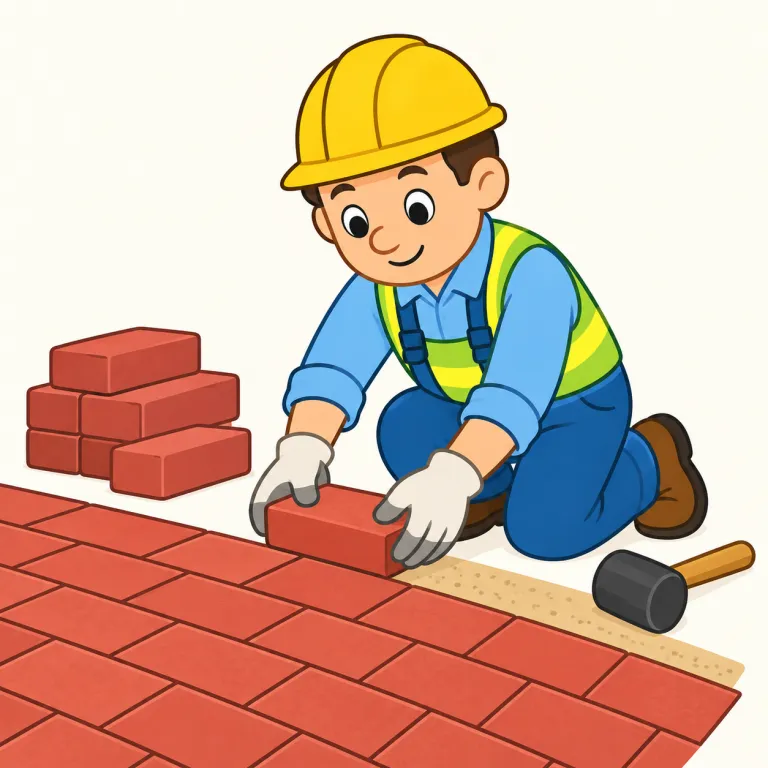
舗装用ブロック、敷石
noun 名詞歩道、テラス、私道などの表面に敷く、平らな石・れんが・コンクリート製ブロックを指します。可算名詞で、施工する人や舗装機ではなく、舗装面を構成する個々の材料を表します。
舗装工事を行う職人、または道路や床面にタイル・レンガ・石などを敷き詰める人を指します。また舗装材を敷く機械や道具のことも意味します。
A paver is a person or machine that lays pavement on roads, paths, or other surfaces. In some contexts, it can also mean a paving stone or block. The exact meaning depends on whether the topic is construction work or building materials.
paver は pave を知っていると覚えやすい語です。-er は worker, printer のように「する人・もの」を作るので、まず「舗装する人」と押さえると、そこから「舗装する機械」にも自然に広がります。pavement(舗道・舗装)や repave(再舗装)と並べて覚えると記憶がつながります。文脈では road paver, asphalt paver なら機械寄り。paper と見間違えず、「道や床を平らに敷きつめる場面」を頭に置くと残りやすいです。
Build it from `pave` plus `-er.` Like `worker` or `printer`, `-er` can mean a person or a machine that does the action. So a `paver` can be a road worker or a paving machine; connect it with `pavement` and `repave` to strengthen the memory.
The experienced paver laid the brick driveway with precision and skill.
経験豊富な舗装業者は、熟練の技でレンガの車道を正確に敷きました。
A mechanical paver was used to quickly lay asphalt across the parking lot.
駐車場にアスファルトを素早く敷くため、舗装機が使われました。
The pavers worked through the summer to complete the street construction.
舗装業者たちは夏を通じて道路工事を完成させるために働きました。
文脈によって、次の意味でも使われます。
歩道、テラス、私道などの表面に敷く、平らな石・れんが・コンクリート製ブロックを指します。可算名詞で、施工する人や舗装機ではなく、舗装面を構成する個々の材料を表します。
paver は pave「舗装する」に -er が付いた語で、pave は古フランス語 paver、さらにラテン語 pavire「地面を突き固める」にさかのぼる。もともと「たたいて平らにする」感覚なので、舗装業者にも舗装機にも使われるのが腑に落ちる。同根語に pavement、repave。
Paver comes from pave plus the agent ending -er. Pave came through Old French paver from Latin pavire, meaning to beat or ram down the ground. The original sense was making a surface firm and flat by striking it, which later became the idea of paving a road. Pavement and repave come from the same root.
この英単語をクイズで覚えよう