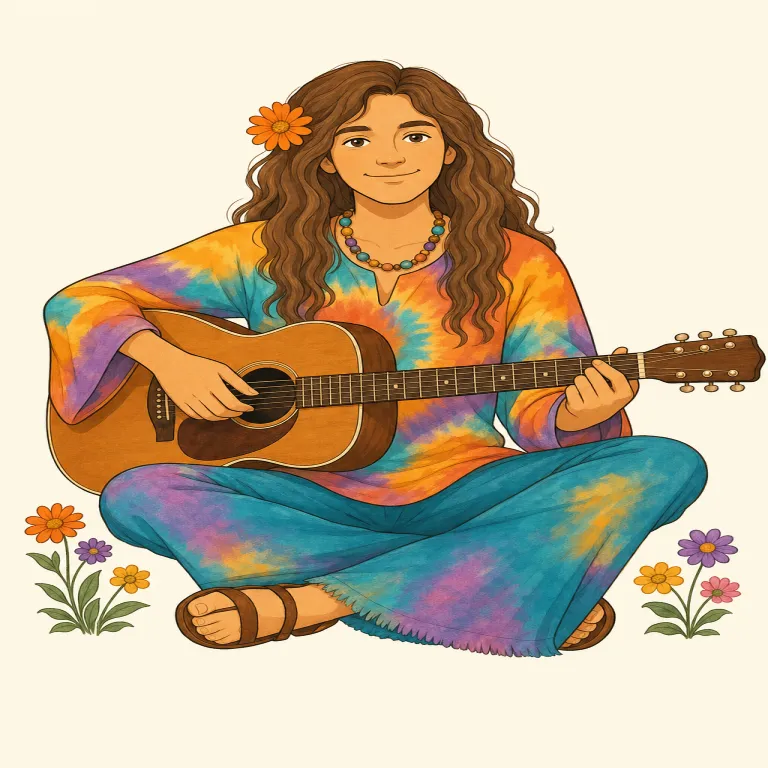
腰幅の広い、尻の大きい
adjective 形容詞人の体つきについて、腰幅が広い、または尻が大きく目立つことを表すくだけた形容詞です。主に英国英語で使われ、対抗文化の人を指す同綴りの名詞とは意味も語源上の成り立ちも異なります。
ヒッピーとは、主に1960年代から1970年代の対抗文化に属し、既成の社会的慣習や価値観にとらわれない生活を目指した人を指します。反戦、自然への回帰、自由な表現などを重視し、共同生活や音楽、アートを通じてその価値観を表しました。
A hippy is a person connected with the social movement of the 1960s and 1970s that valued peace, freedom, and a simple lifestyle. Hippies often rejected traditional social rules and supported ideas such as love, music, and living close to nature. The word can describe both the movement itself and a style or attitude linked to it.
まず hip を「流行に敏感・時代の空気がわかる」と押さえると、hippy はそこから広がった「体制に合わせるより、自分たちの感覚で生きる人」として覚えやすいです。1960〜70年代の反戦・自然志向・自由な表現と結びつけると定着します。businessperson や citizen のような社会の型にはまる語と対比すると印象が強まり、hippy culture, hippy movement のように文化や運動の文脈で出やすい点も手がかりです。なお綴りは hippie も非常によく見かけるので併せて確認すると混乱しません。
Connect it with the 1960s and 1970s: peace, nature, freedom, and anti-war culture. That image makes the word much easier to keep in memory. Also note the spelling: `hippy` and `hippie` are both common, so recognize both forms.
Hippies rejected mainstream culture and embraced counterculture values.
ヒッピーは主流文化を拒否し、カウンターカルチャーの価値を受け入れました。
The hippy movement advocated for peace and love.
ヒッピー運動は平和と愛を主張しました。
Many hippies lived in communes and pursued alternative lifestyles.
多くのヒッピーはコミューンに住み、従来とは異なるライフスタイルを追求しました。
文脈によって、次の意味でも使われます。
人の体つきについて、腰幅が広い、または尻が大きく目立つことを表すくだけた形容詞です。主に英国英語で使われ、対抗文化の人を指す同綴りの名詞とは意味も語源上の成り立ちも異なります。
hippy は hip「流行に通じた、事情に明るい」に語尾 -y がついた語で、1960年代の対抗文化の人を指すようになりました。hip の語源は jazz slang の hep/hip 系とされ、hipster や unhip と同根なので、「時代に乗っている人」が核だと見えます。
Hippy comes from hip with the ending -y. Hip grew in American slang, especially jazz slang, where it meant aware, fashionable, or up to date. In the 1960s, hippy became the name for people linked with counterculture and alternative lifestyles. Related words include hipster and unhip.
この英単語をクイズで覚えよう