nature
nature は英検7級レベルの英単語で、「自然、性質、本質」という意味があります。発音記号は /ˈneɪtʃɚ/ です。
意味一覧 (2件)
自然
解説 Definition
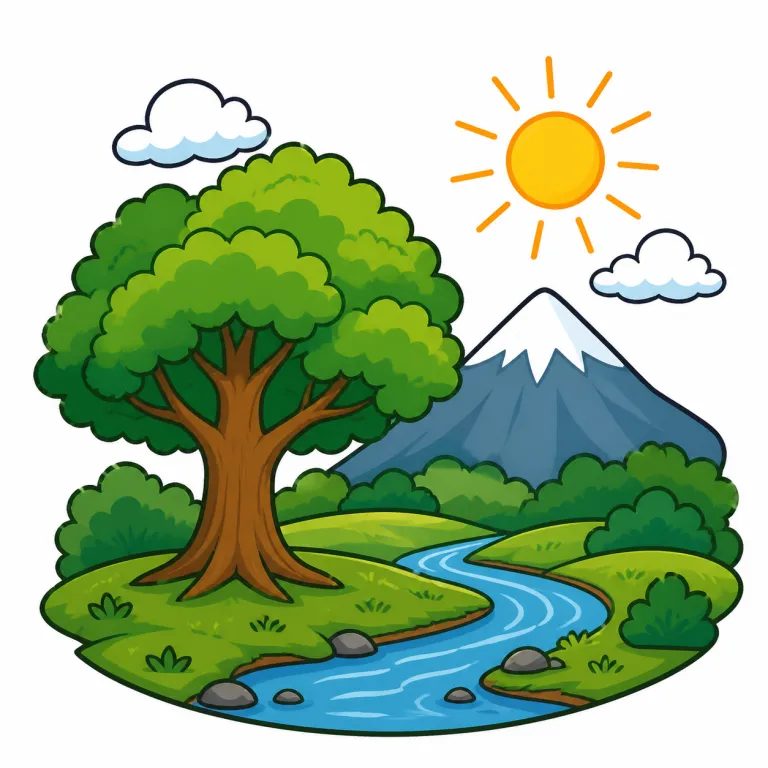
人が作ったものではない、山・川・海・森・動物・植物などの世界を表します。町や建物ではなく、もともと地球にあるものやそのようすを指します。
The world that is not made by people, such as mountains, rivers, forests, animals, and plants. It means the natural world around us.
覚え方のコツ Memory Tip
nature はカタカナの「ネイチャー」と結び付け、山・川・海・森・動物・植物を一枚の風景にまとめて覚えると定着しやすいです。この語義では、建物や機械など人が作ったものと対になる「自然の世界」を表します。たとえば町を出て森に入り、鳥の声や木々の緑に囲まれる場面で I love nature. と言ってみましょう。nature はこの意味では基本的に数えない名詞なので、ふつう a nature とはしません。protect nature、enjoy nature、nature gives us ... の形も一緒に押さえると使いやすくなります。
When you hear nature, picture forests, rivers, mountains, and animals. It is the world people did not make.
例文
I love nature in spring.
私は春の自然が大好きです。
Nature gives us clean air.
自然は私たちにきれいな空気をくれます。
We see nature in the park.
公園では自然を目にすることができます。
性質、本質
(意味 2)
解説 Definition
nature は、人や物がもともと備えている性質や、問題・現象の本質的なあり方を表す名詞。人の気質や本性を述べるときにも、物事の根本的な特徴を説明するときにも使われる。ここでは「自然」ではなく「性質」「本質」の意味である。
Nature is the basic character or essential quality of a person, thing, or situation. It is used when you want to say what something is really like at its core. This meaning is more abstract than the word's use for the natural world.
覚え方のコツ Memory Tip
nature はまず natural を思い出すと覚えやすいです。natural が「作り物でない、もともとの」という感覚なので、nature も「あとから付いた特徴」ではなく「その人・物が本来もつ性質、本質」とつながります。human nature なら「人間の本性」、the nature of the problem なら「その問題の本質」。character が個人の性格寄りなのに対し、nature はもっと根本的で、生まれつき・本来のあり方を指しやすい語です。
Notice how `nature` often points to something deep and basic, not just something easy to see. Compare `human nature` with `the nature of the problem` to link people and situations with the same core idea. It is more fundamental than `character`, so think of it as the inner quality underneath.
例文
It is in her nature to be kind to everyone she meets.
誰に会っても親切にするのは彼女の性質だ。
The nature of the problem became clear after further investigation.
さらに調査したあと、その問題の本質が明らかになった。
Human nature drives us to seek connection with others.
人は本来、他者とのつながりを求めるものだ。
nature の類義語・関連語
類義語
対義語
nature の語源・成り立ち Etymology
ラテン語の natura に由来し、「生まれたもの」や「ものの本来のあり方」を表す語でした。そこから、英語では人が作ったものではない世界、つまり自然を表すようになりました。
Nature comes from Latin natura, meaning birth or the basic character of something. In English, it came to mean the world not made by humans.
同じレベルの語彙をもっと
英検7級の一覧へ →外部辞書で調べる
この英単語をクイズで覚えよう